NUGU: A Study of Emotional Expression in AI
A concept project to add a display to SK Telecom's next AI speaker. I explored what role facial expressions and movement could play when people interact with AI. Researching voice assistants and social robots from an HRI (Human–Robot Interaction) perspective, I led the visual concept design, exploring the form of the face, emotional expression, and motion. The project ended at the concept stage.
Problem
What if a voice-only AI speaker had a screen?
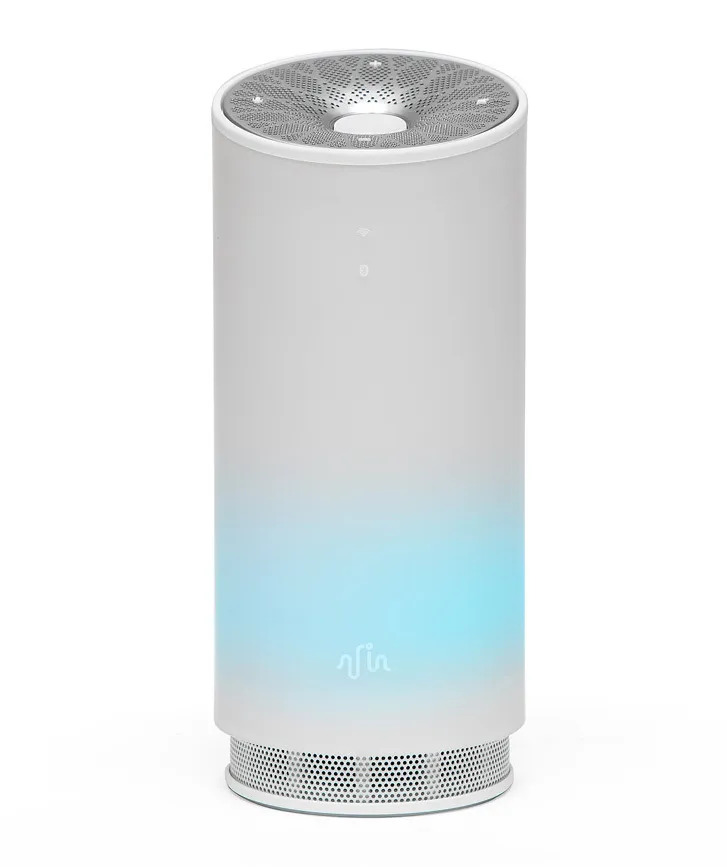
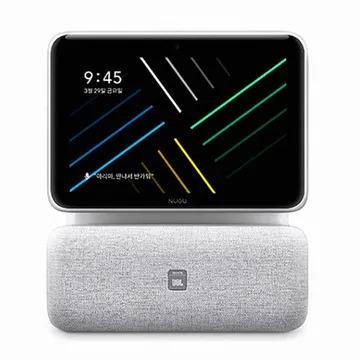
The existing NUGU communicated with users only by voice. SK Telecom's AI R&D center was then planning a next-generation model with a display.
A screen could convey the AI's state and reactions visually. But what the AI should look like, and how it should react in conversation, hadn't been decided.
Research
What should AI that interacts with people look like?
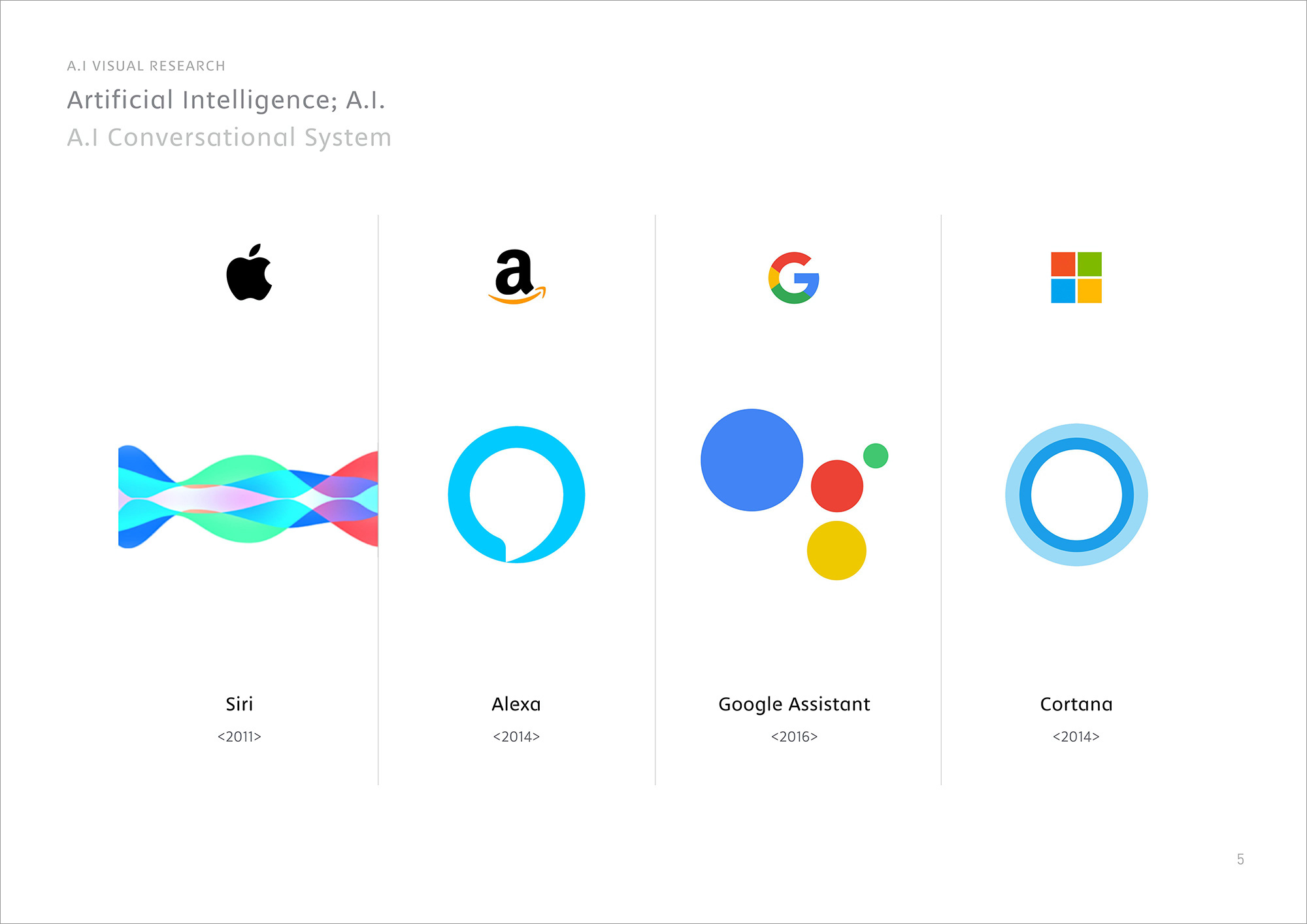
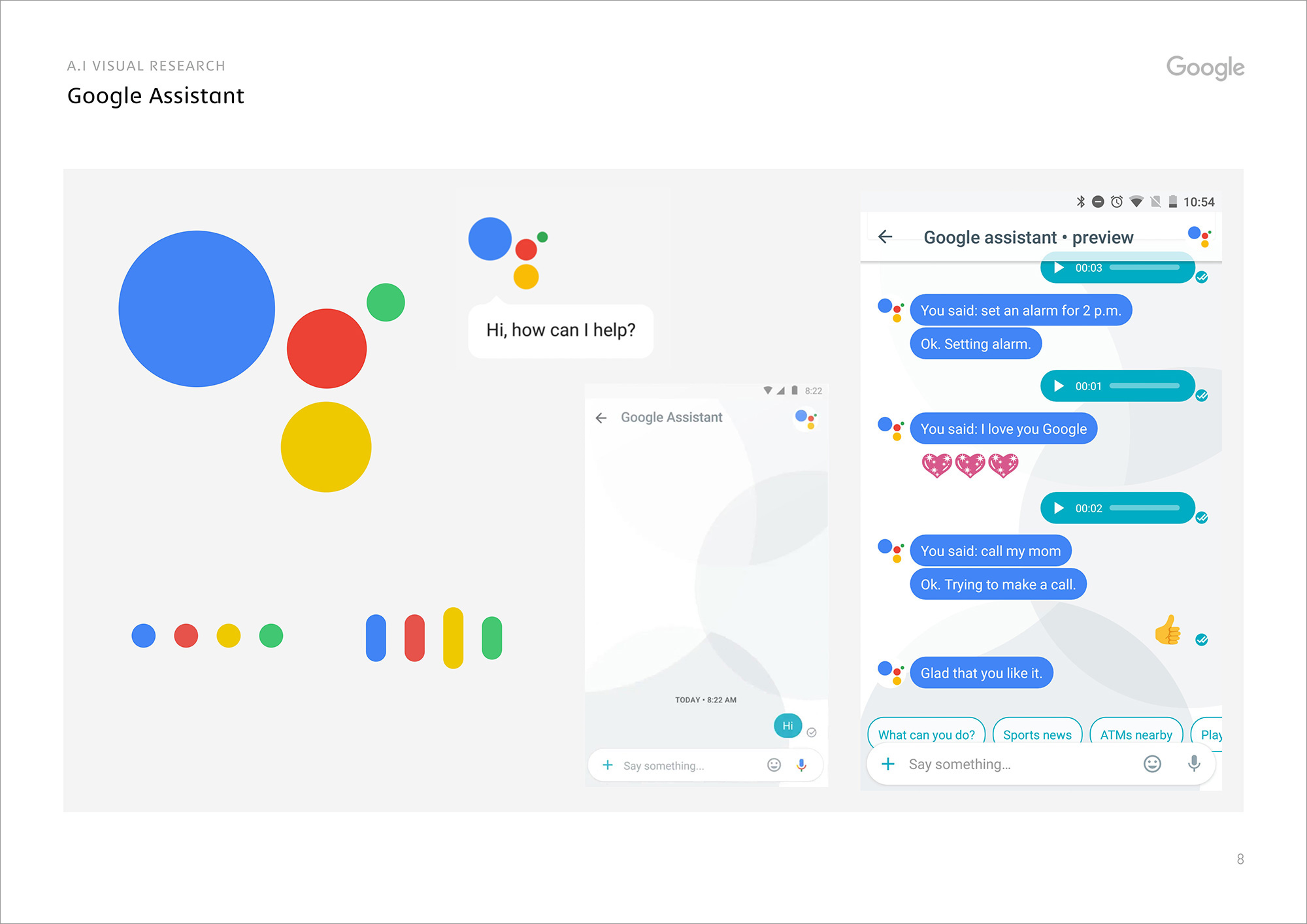
From an HRI perspective, I studied how voice assistants and social robots are expressed visually, from voice assistants like Siri, Alexa, Google Assistant, and Cortana to AI characters in films and social robots like Buddy and Pepper.

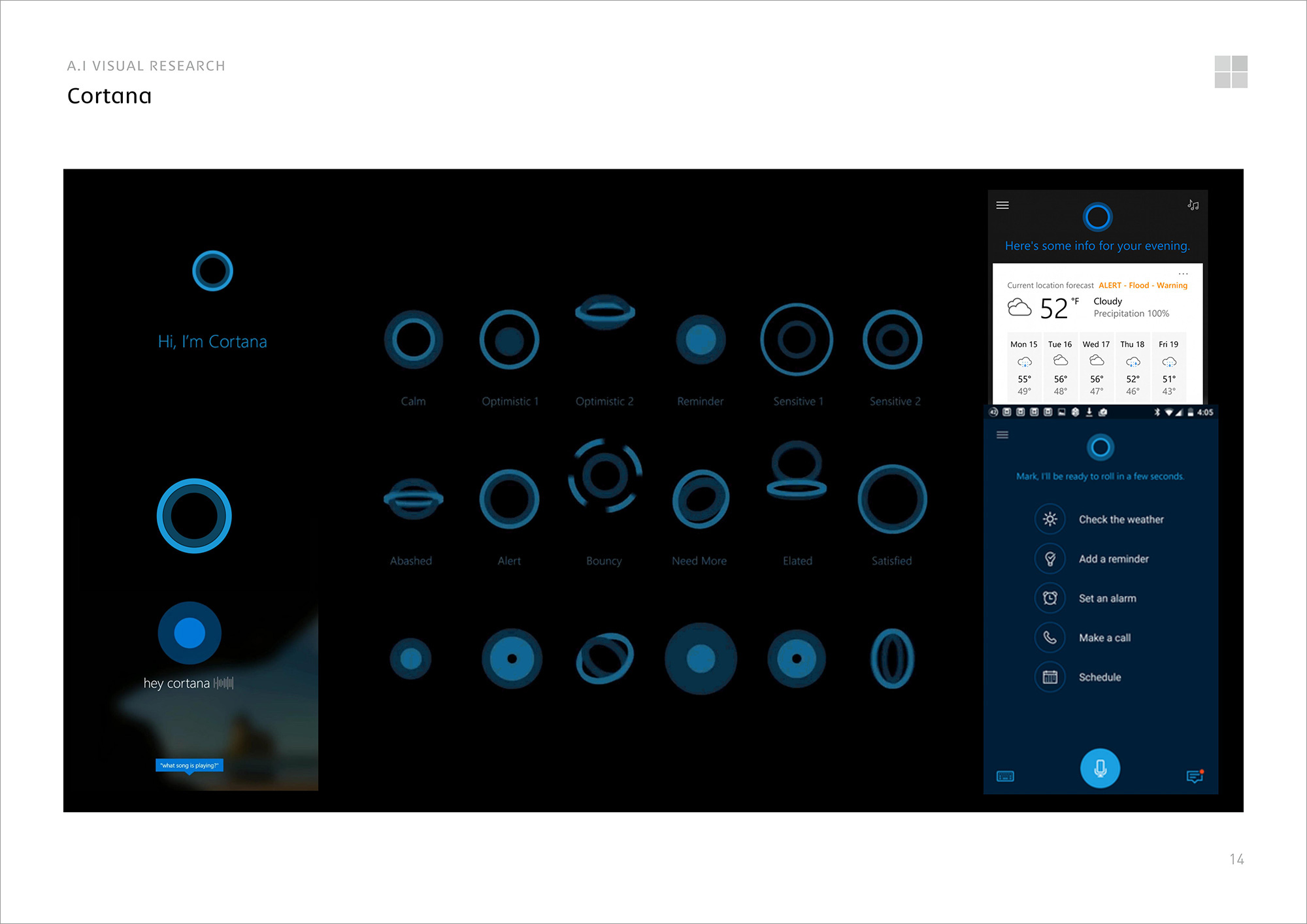
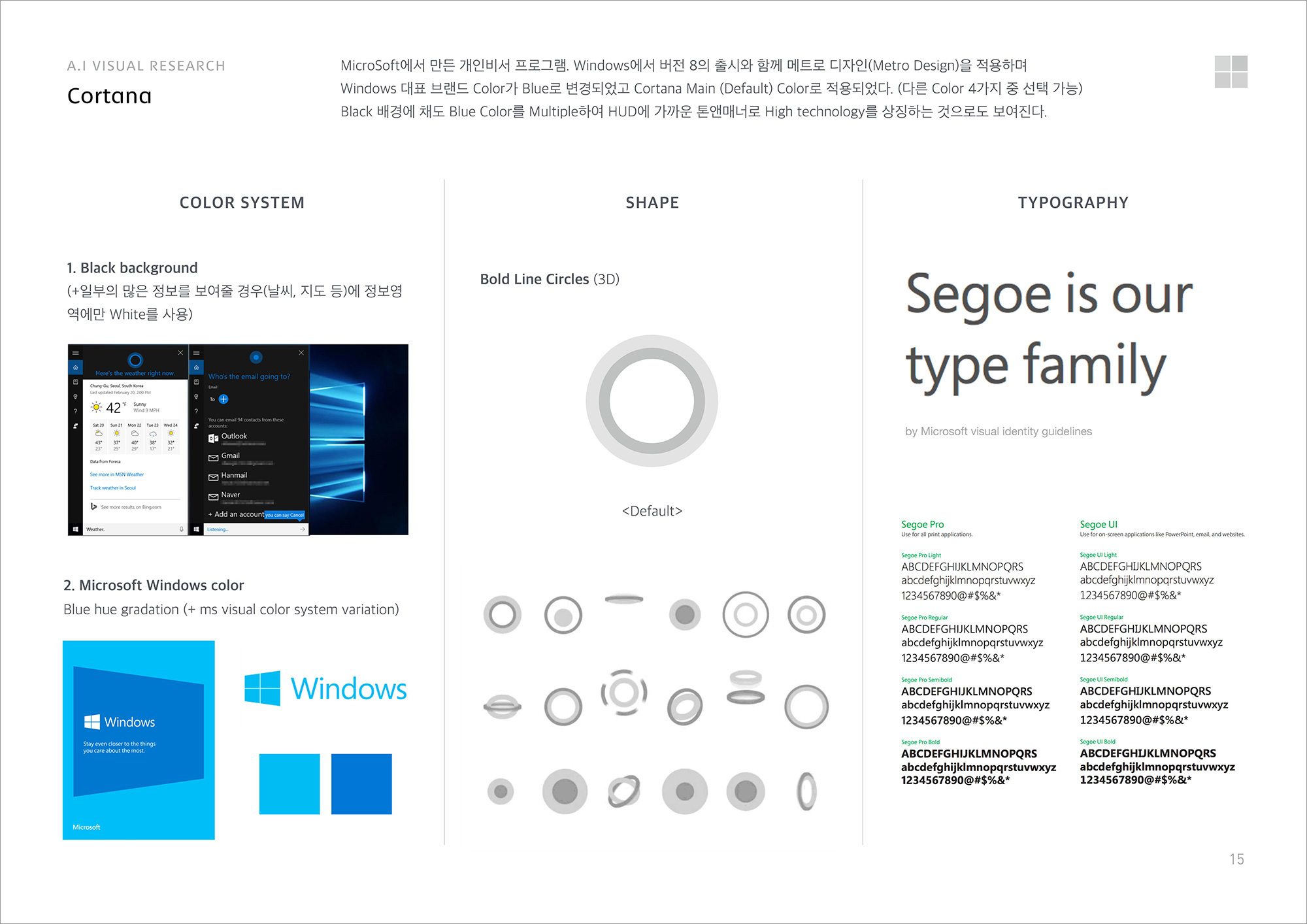
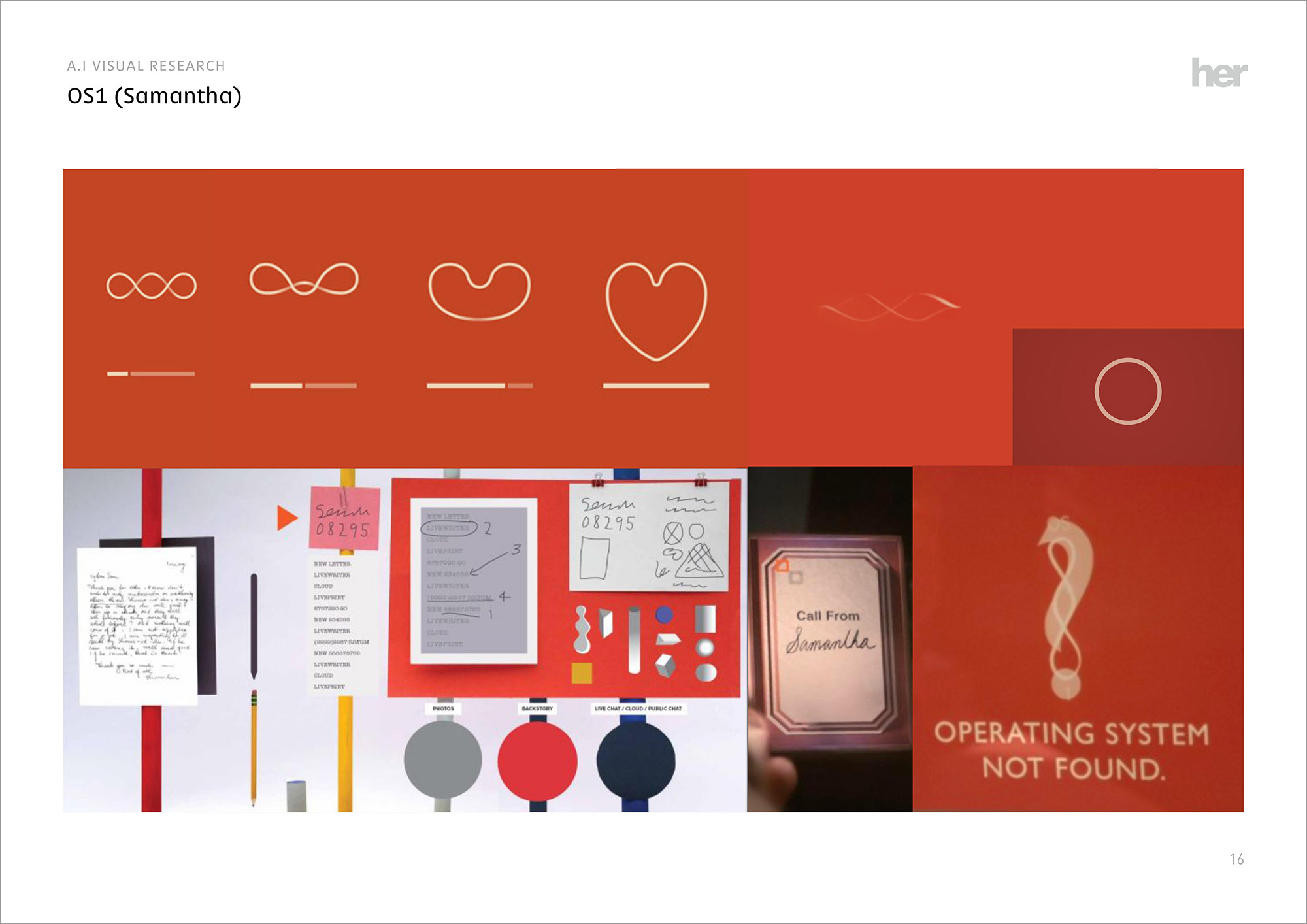
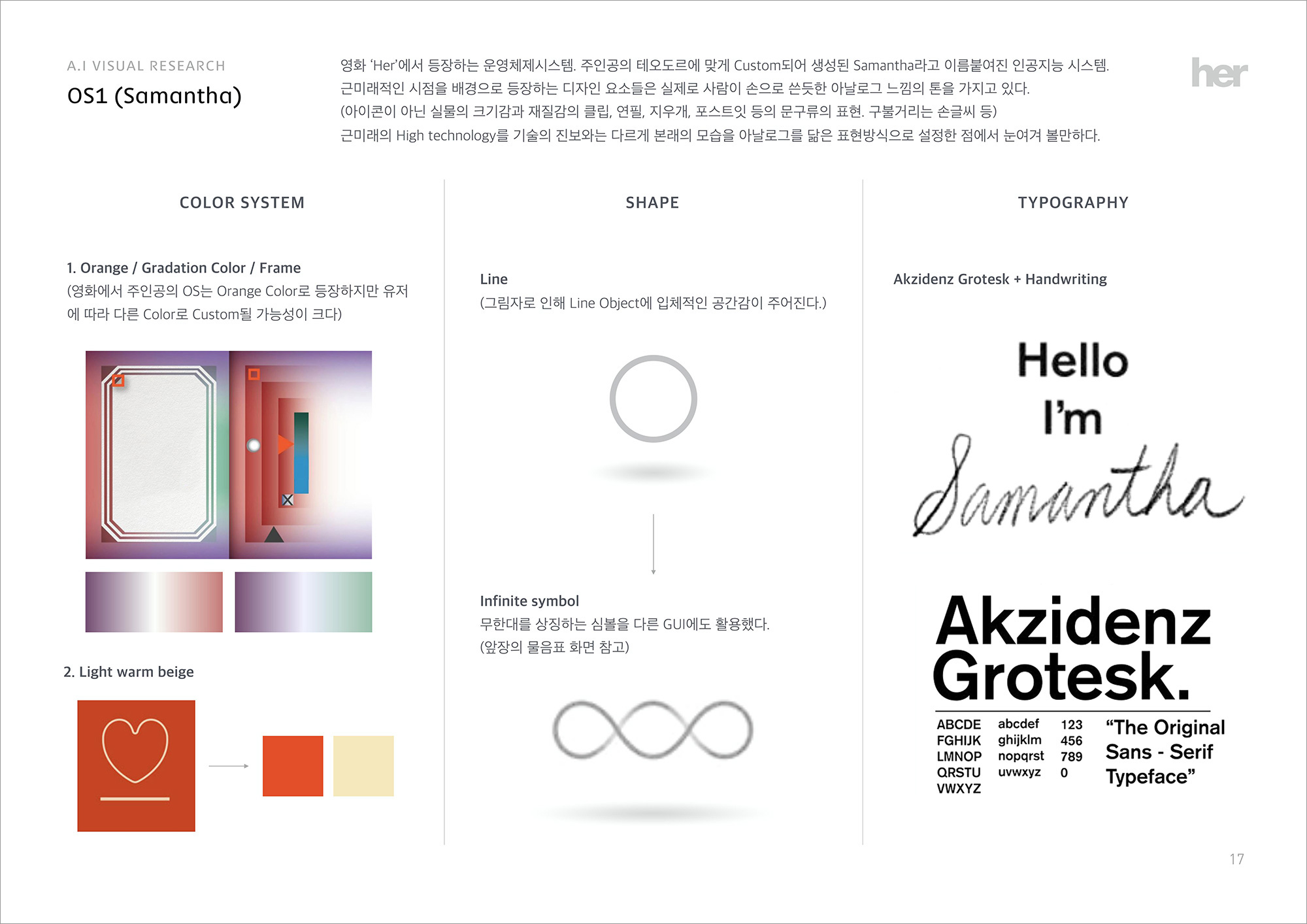
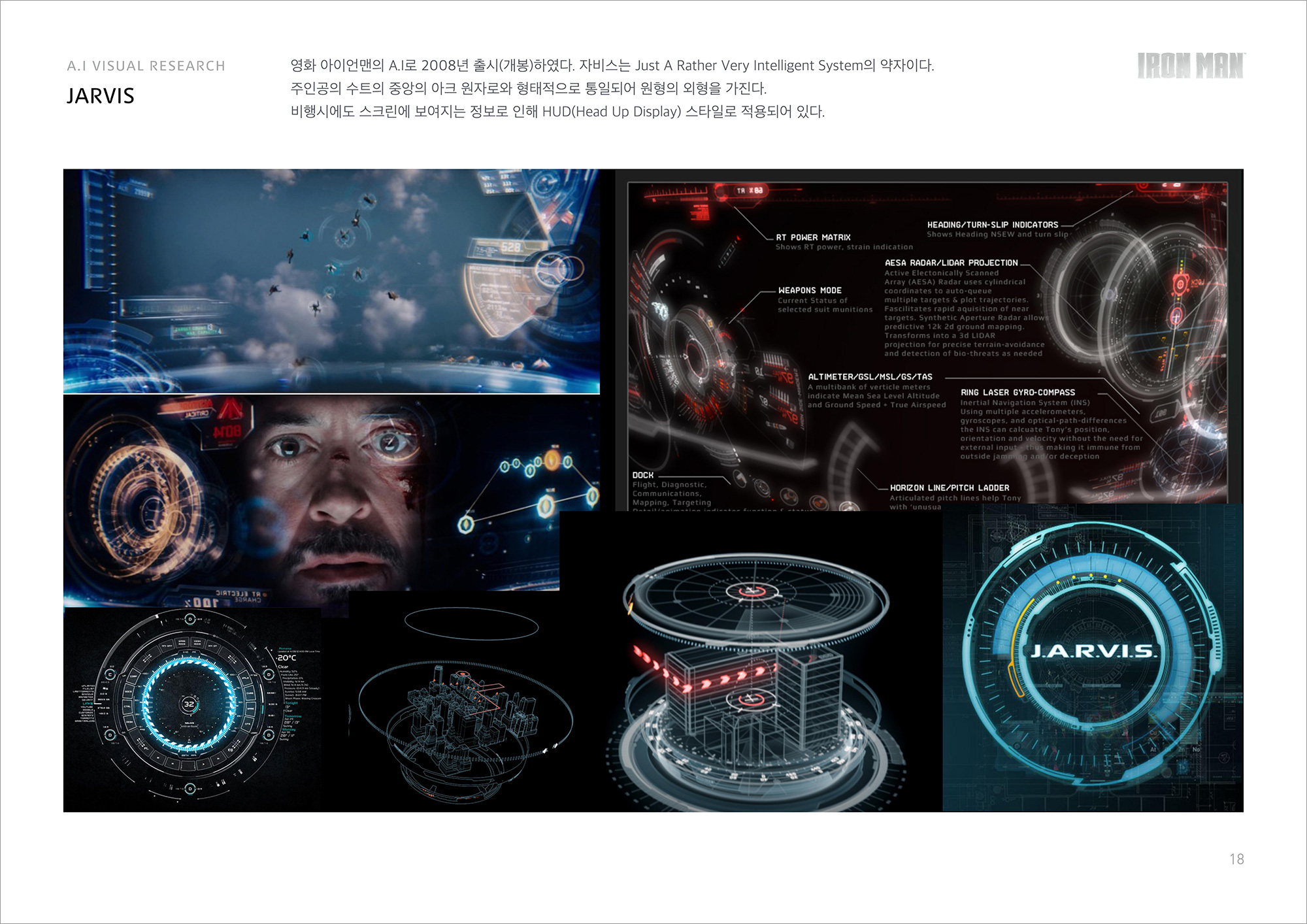
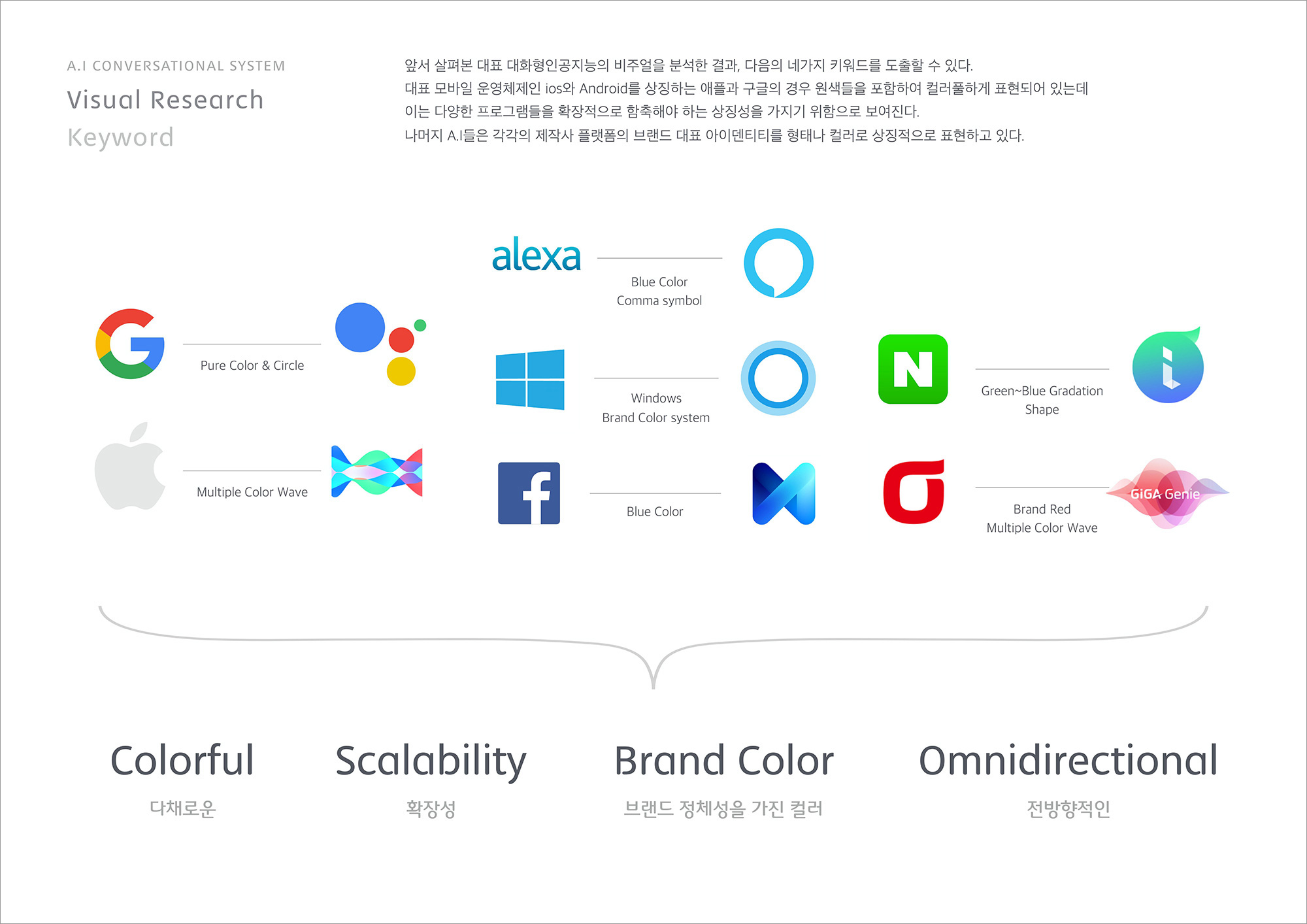
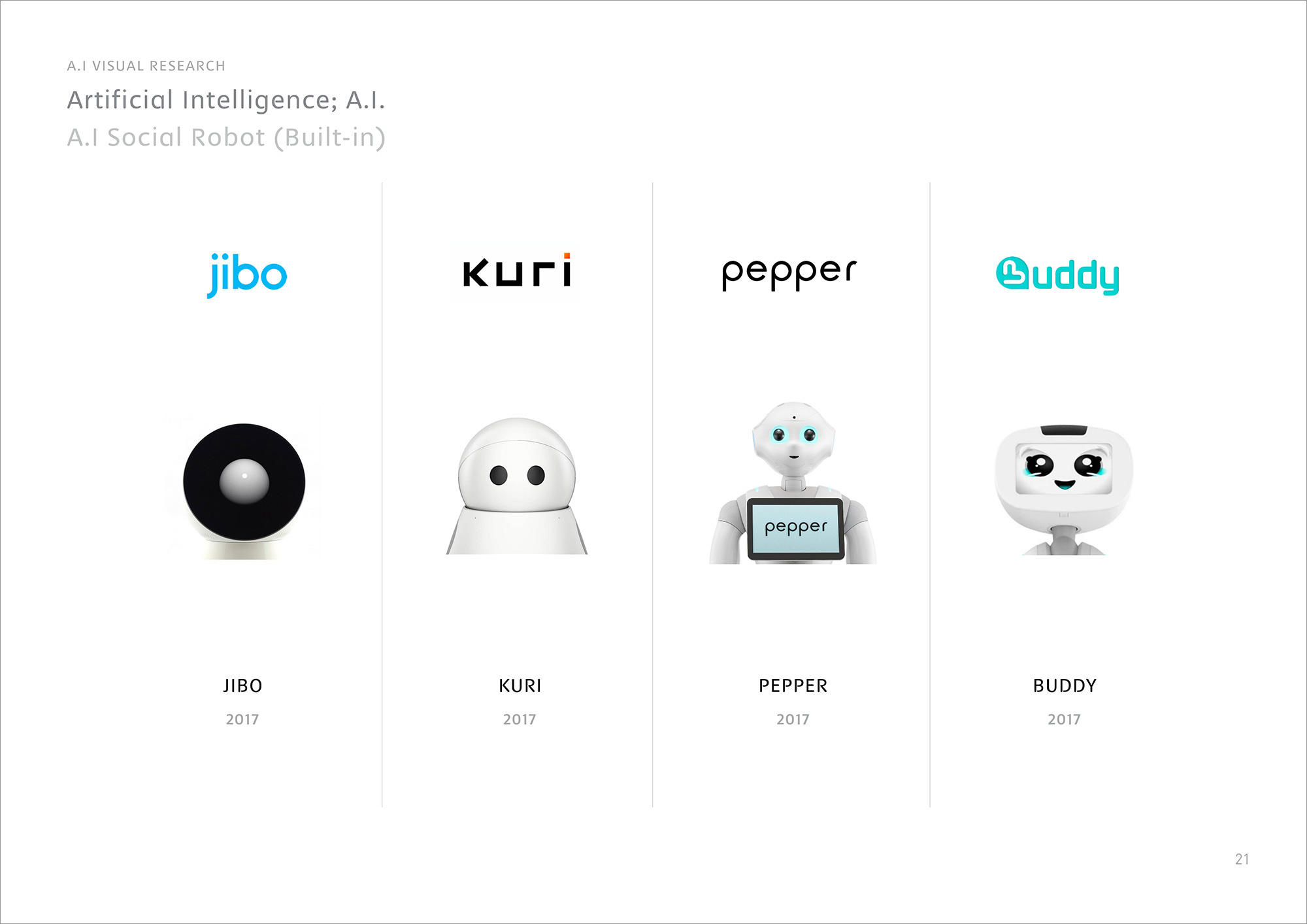
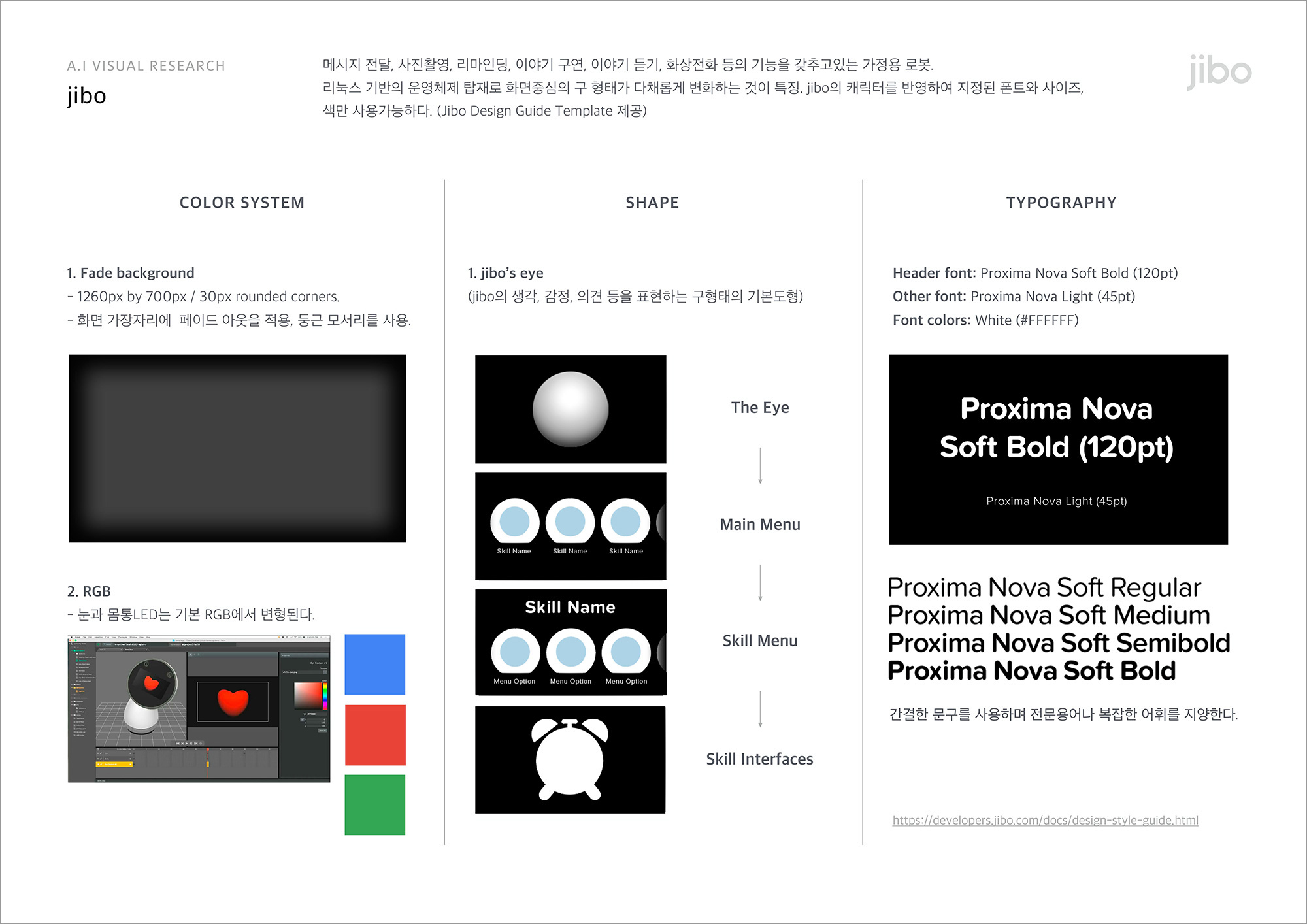
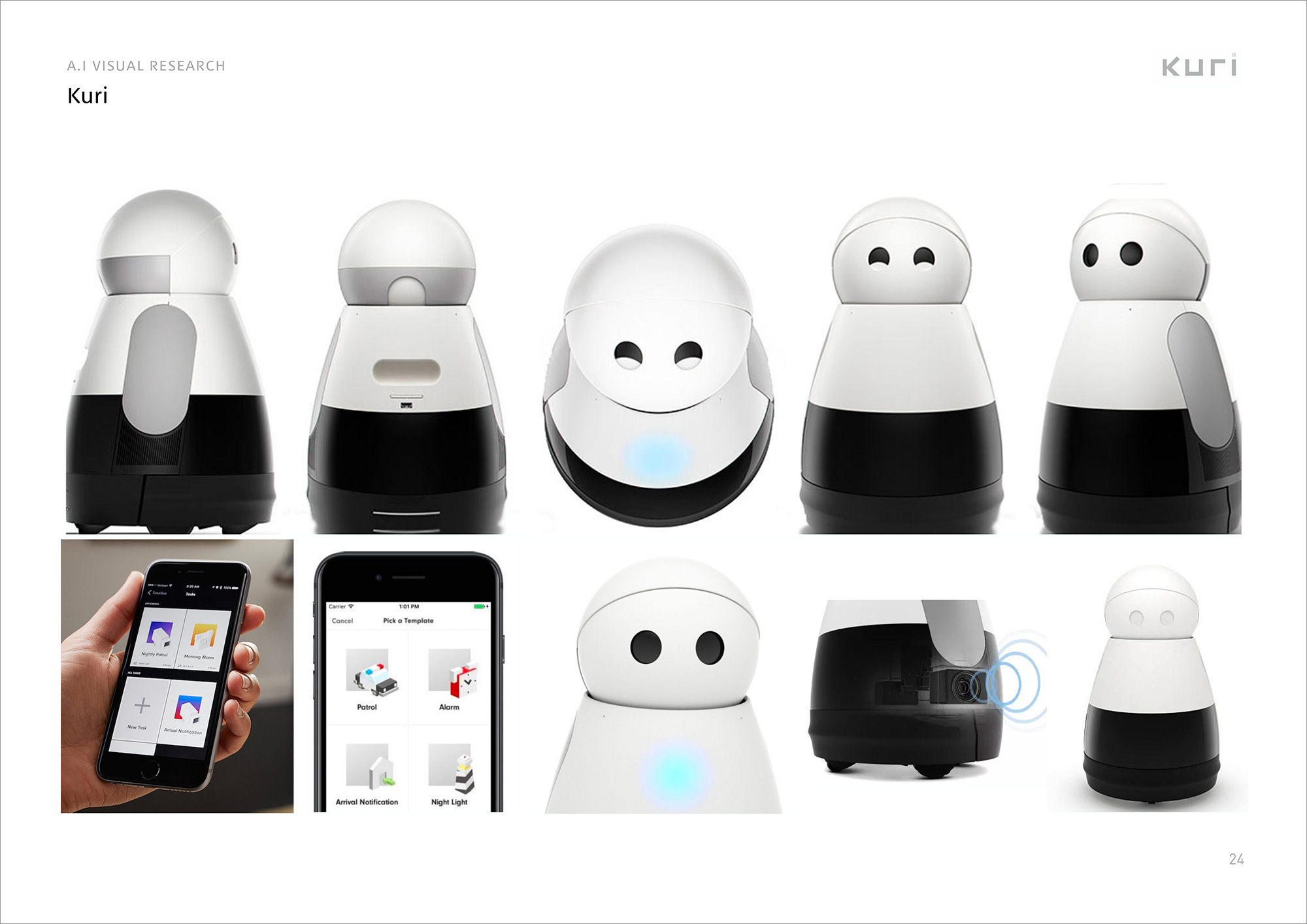
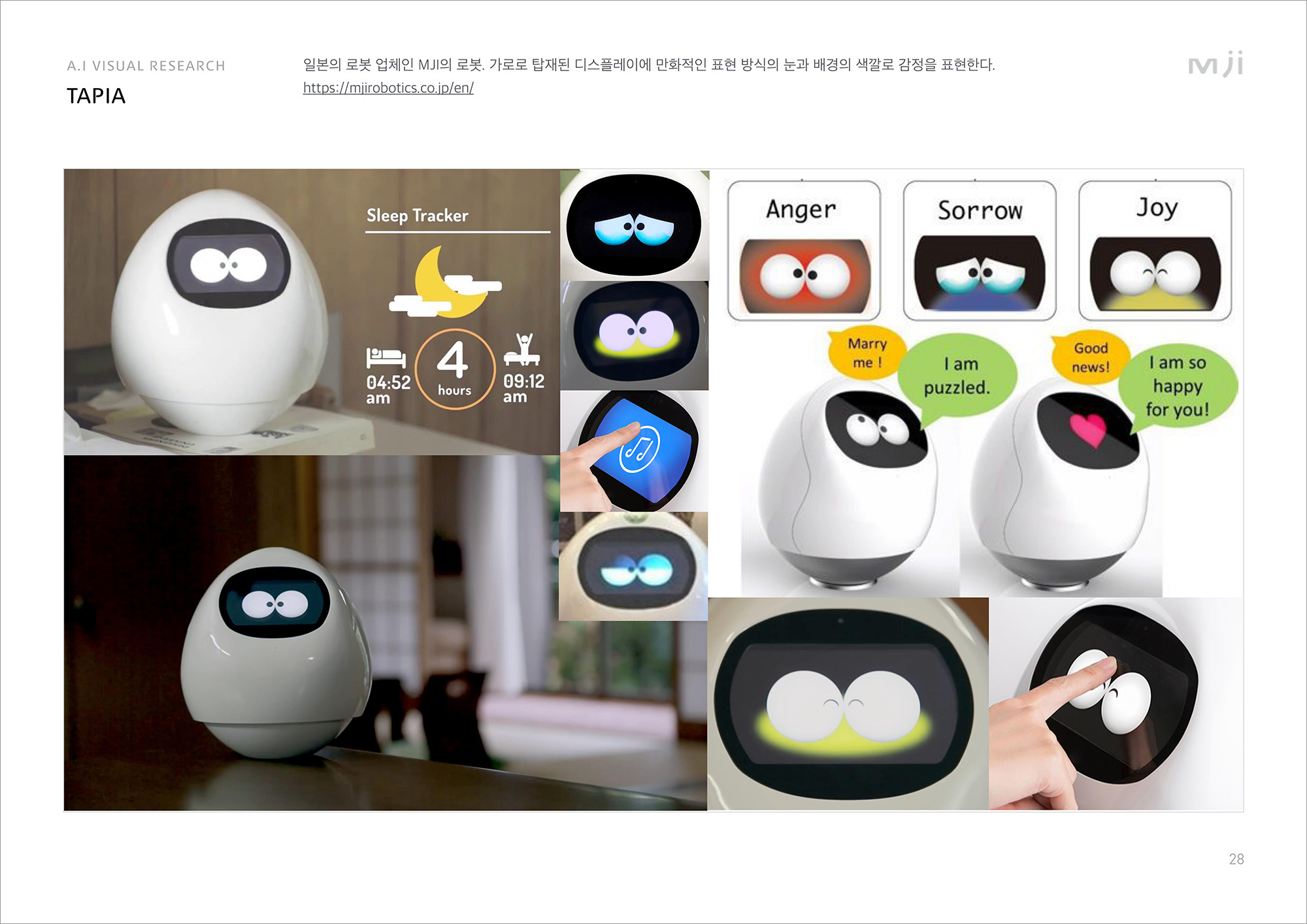
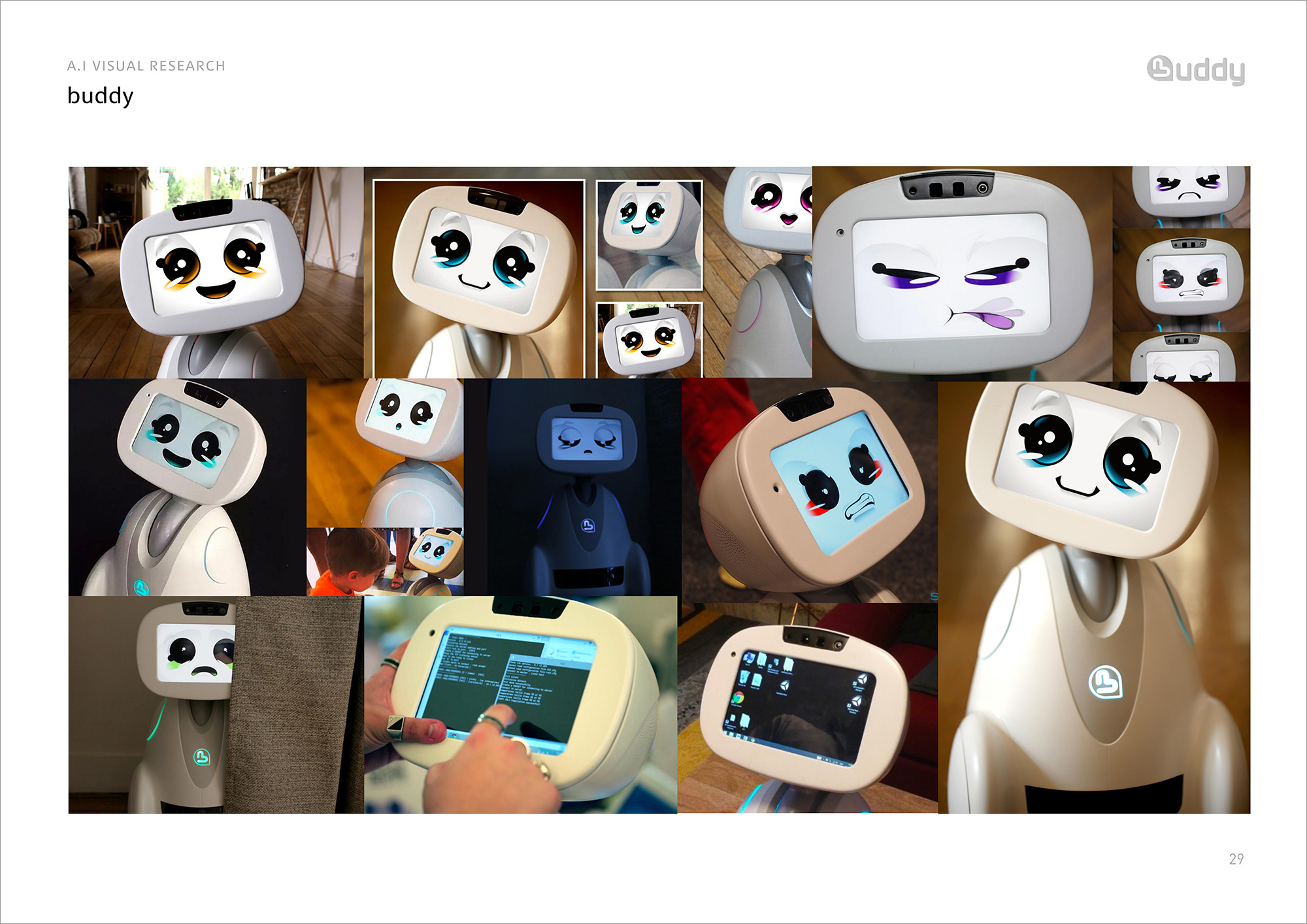
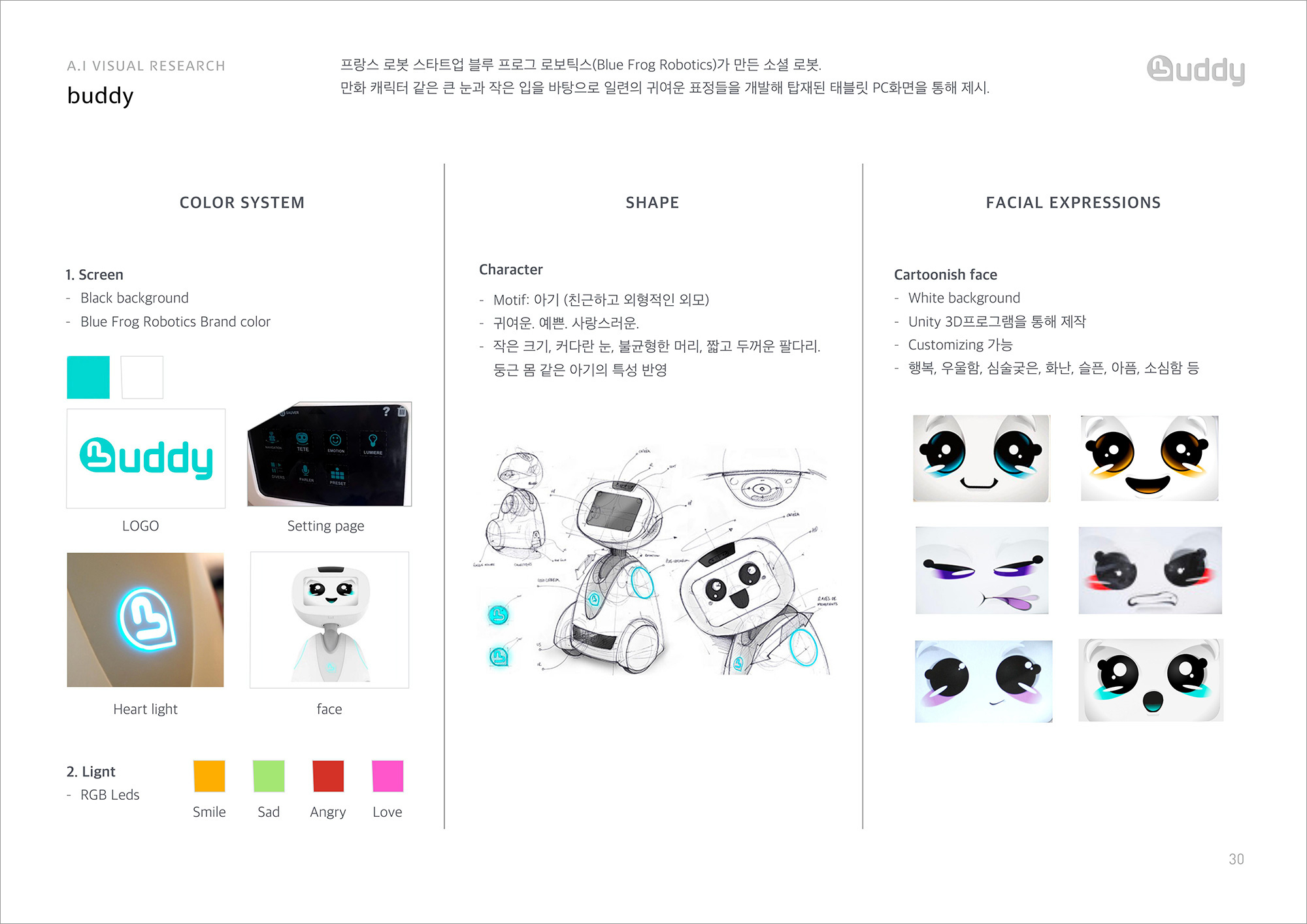
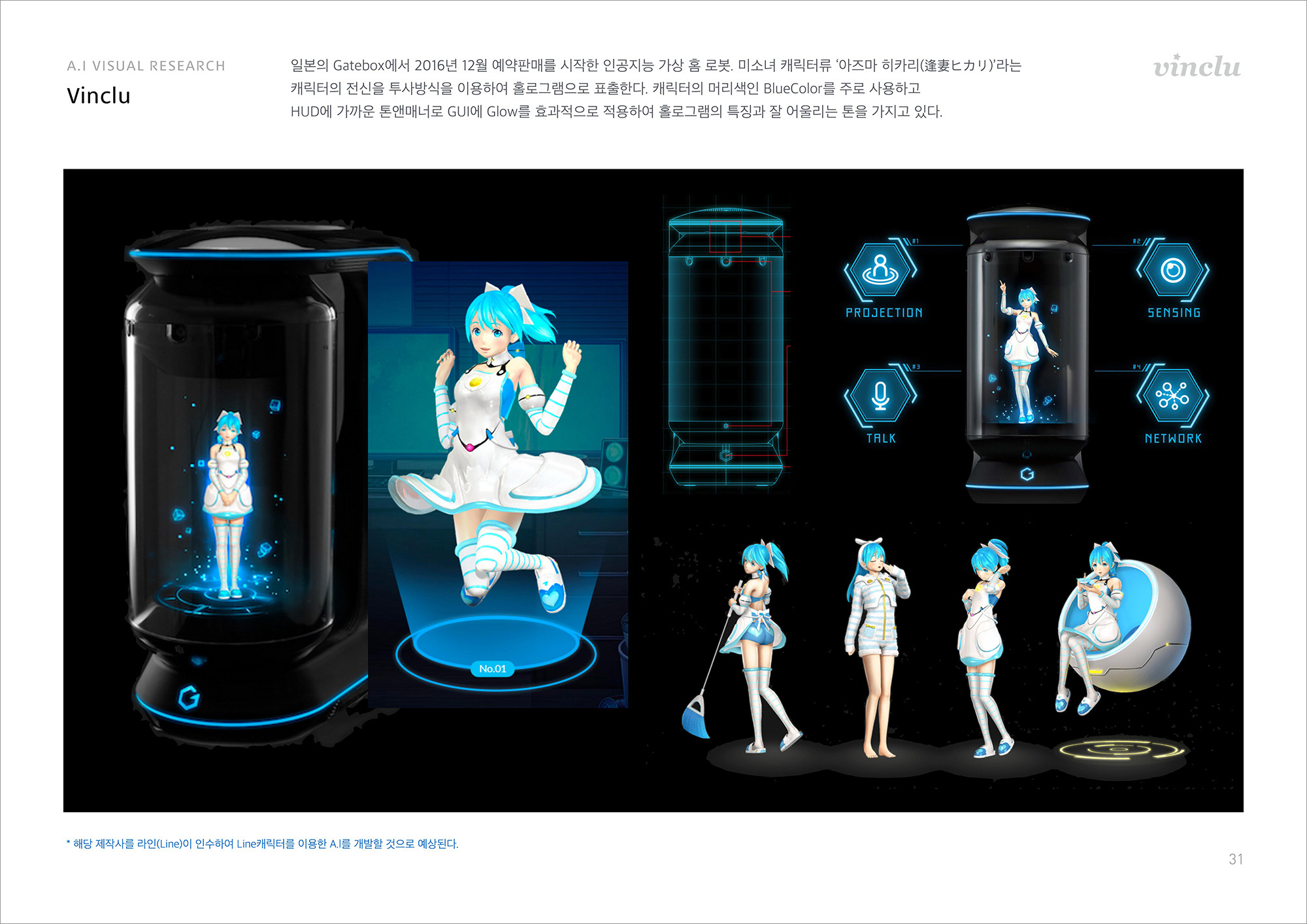
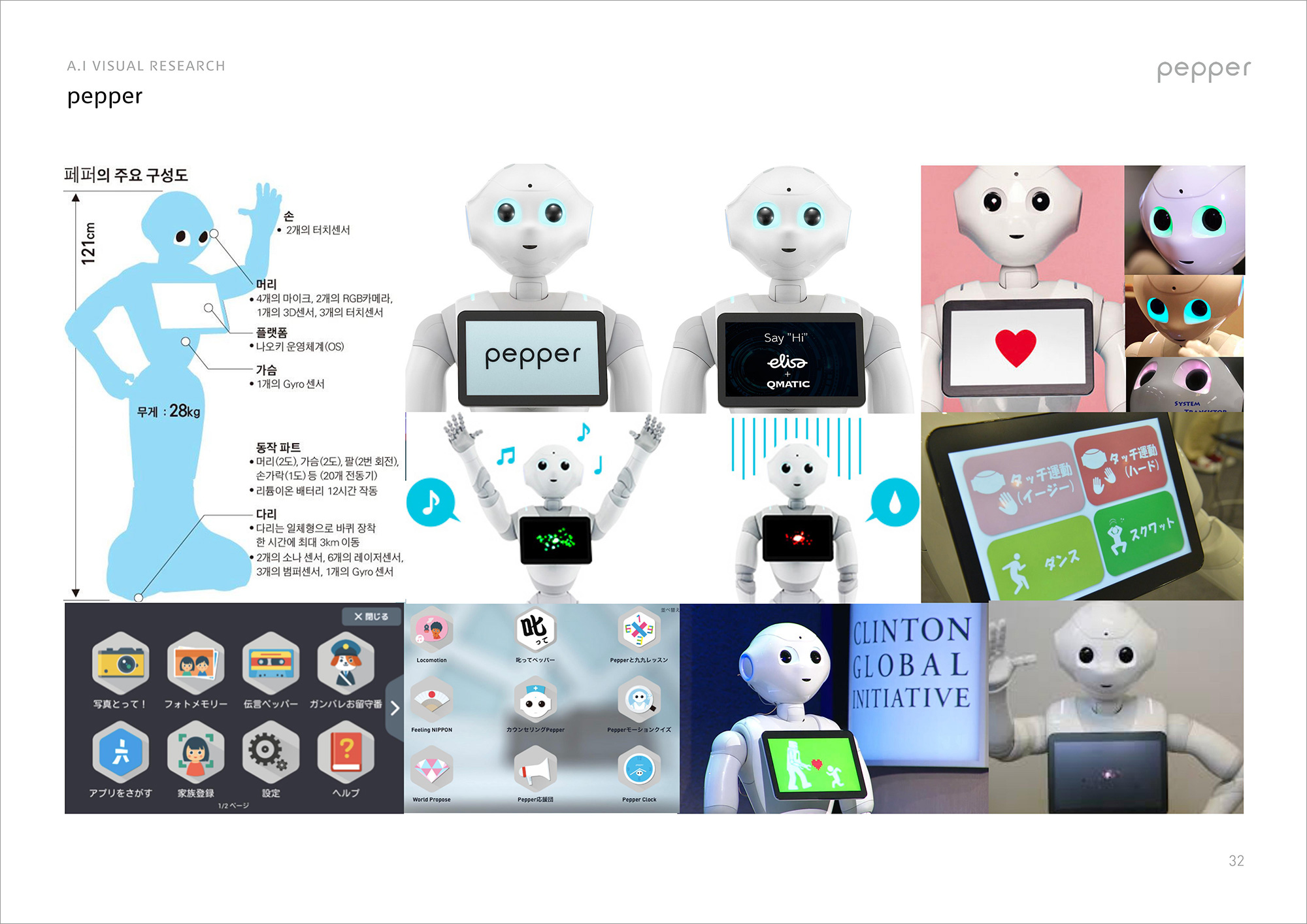
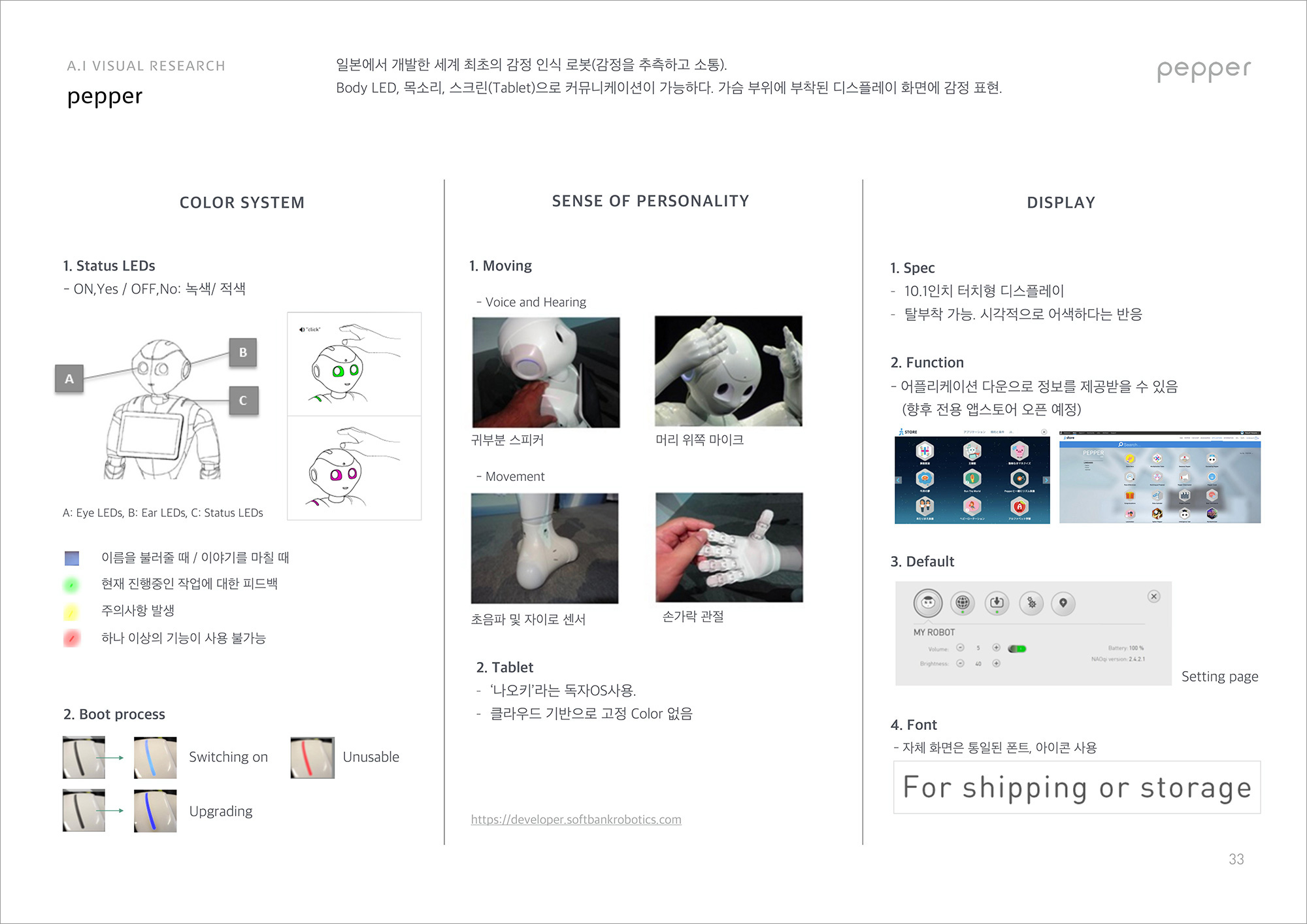
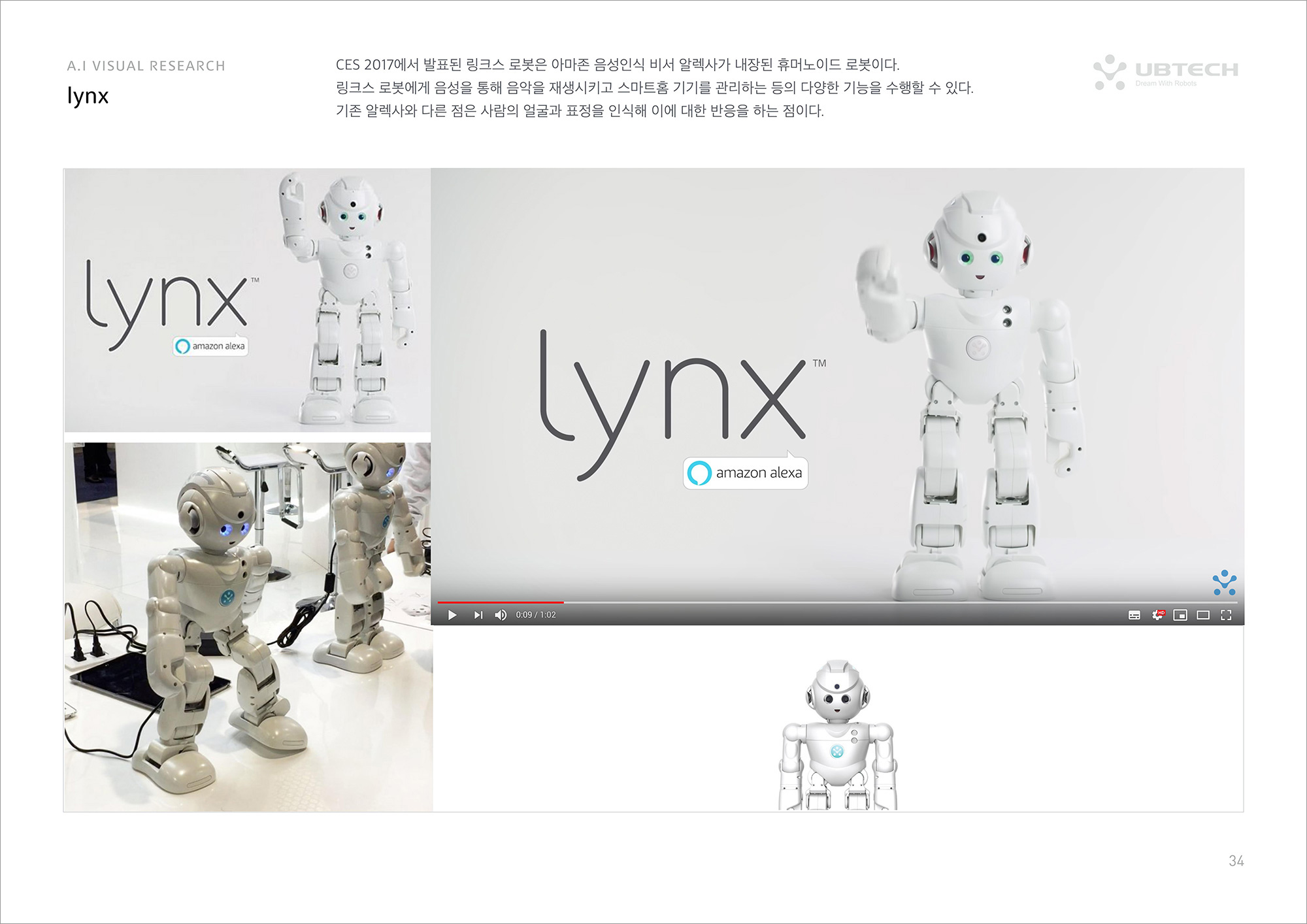
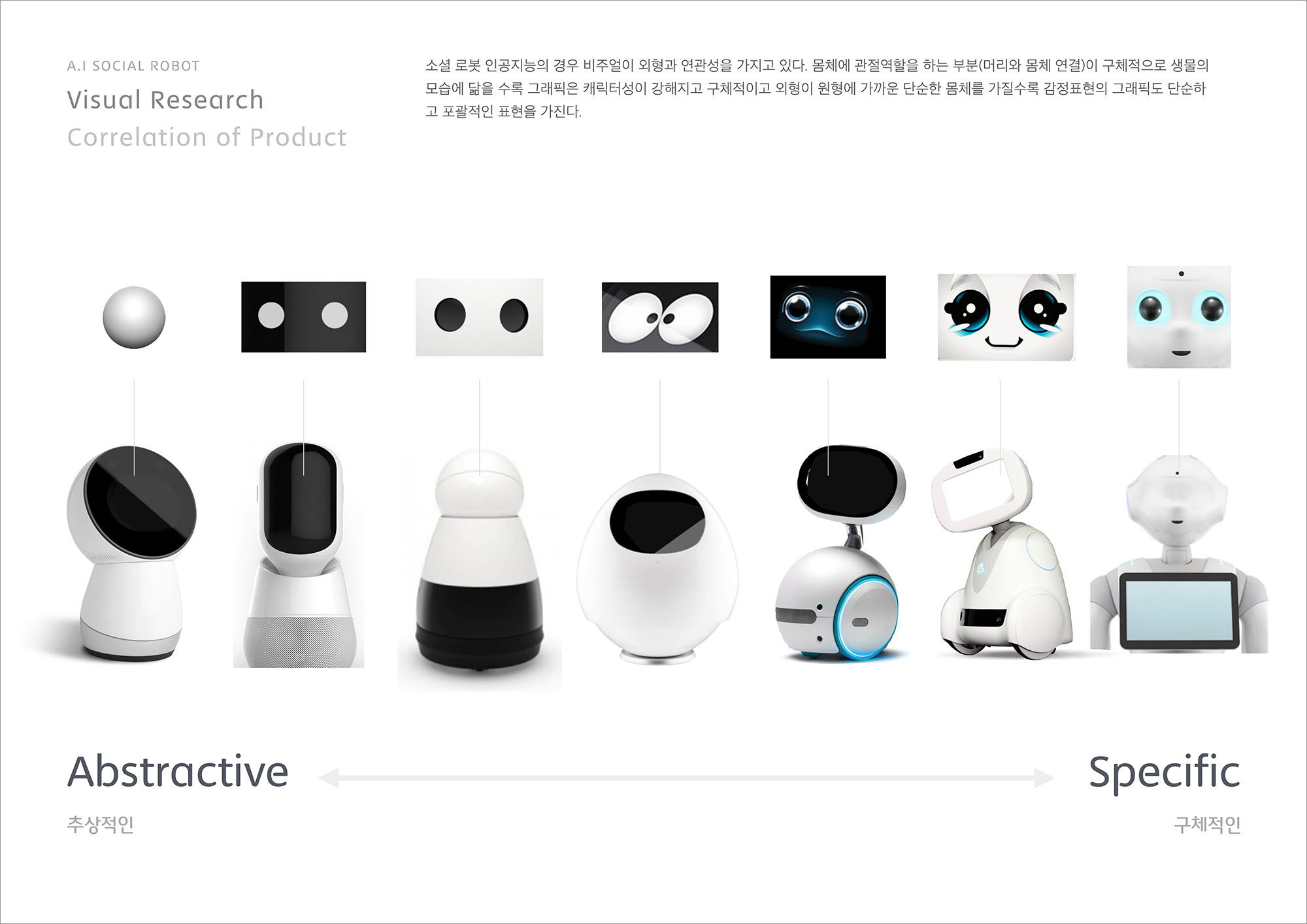
Desk research: voice assistants, AI in films, and social robots
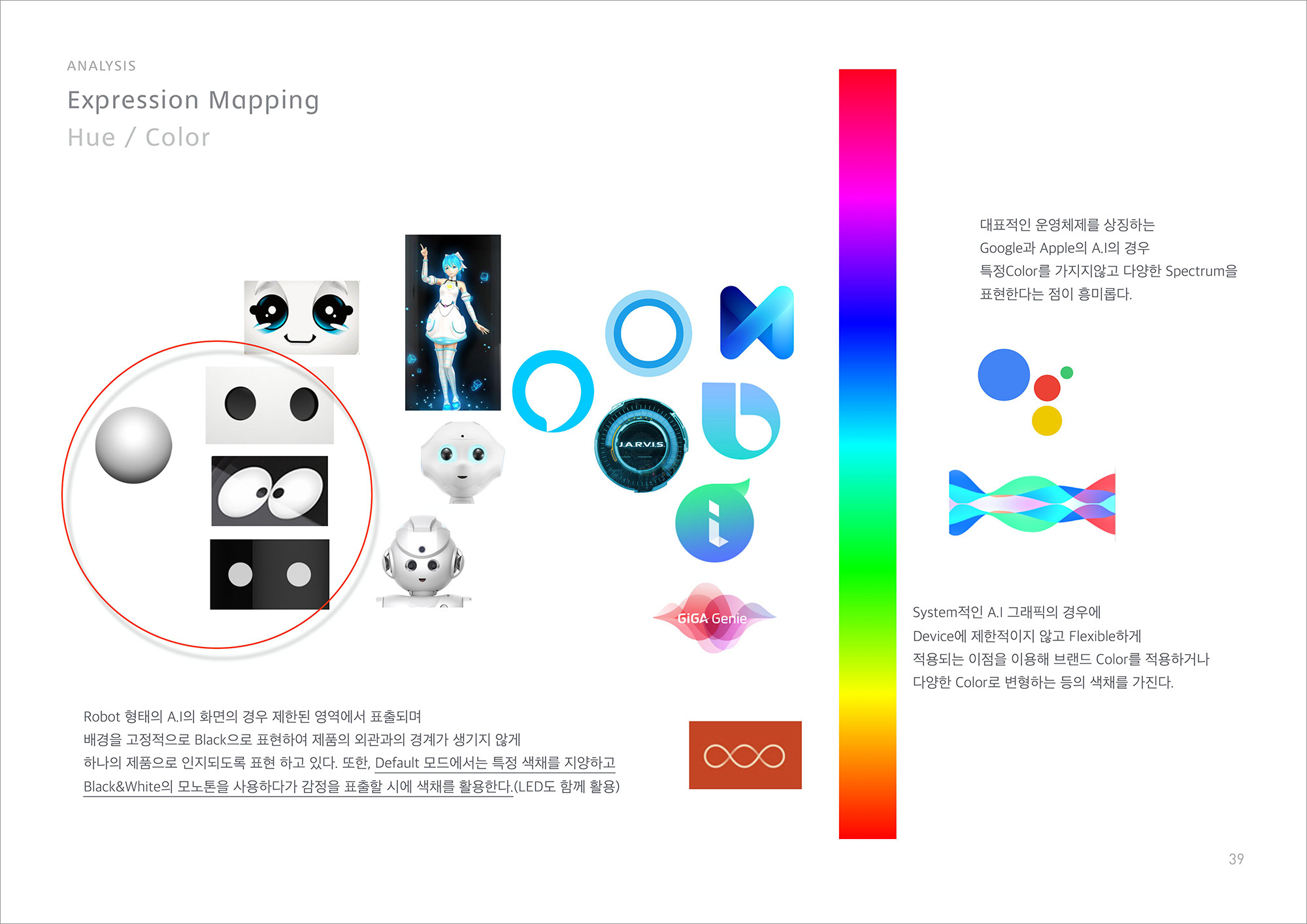
Sorting the examples by form, input method, and use of color revealed a difference between two approaches.
Voice assistants mainly expressed their state through light, color, and abstract forms. With no particular face or personality, they could adapt flexibly to many situations.
Social robots, on the other hand, conveyed emotion directly through eyes and expressions. This feels friendly, but their appearance gives them a distinct personality. I also found examples that connected a screen's black background naturally with the hardware and used color to express emotion.

Concept
Three keywords for designing an AI's expressions
The research led to three keywords: reflect the brand identity, keep the base form neutral, and use part of a face so emotion can come across even on a small screen.
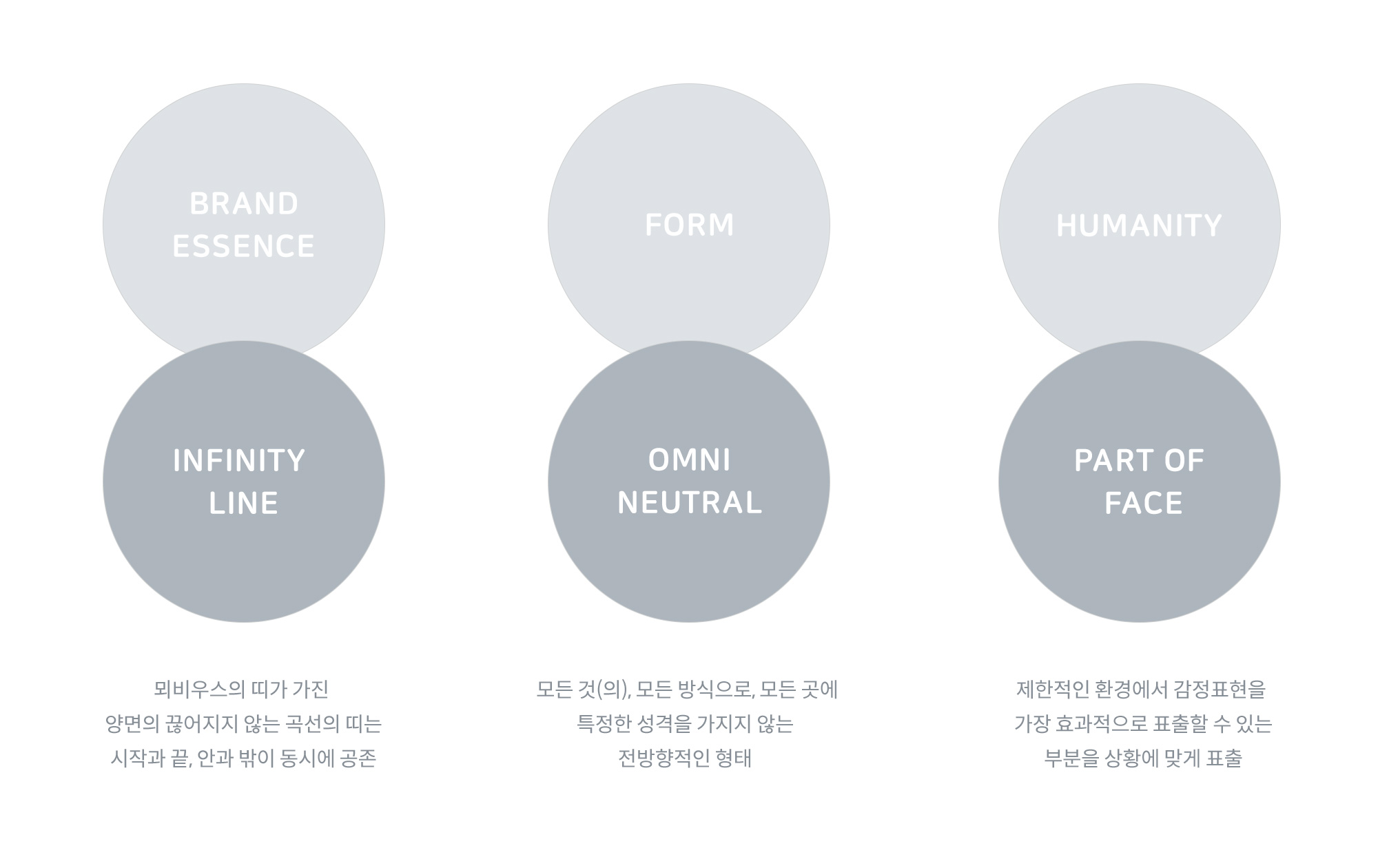
1. Brand identity: a continuous curve
The idea came from SK Telecom's brand symbol, the Möbius strip. I read its endless curve as the ongoing connection between people and AI, and carried it into the visual concept.

2. Form: a face without a fixed personality
The AI's base form was designed not to suggest a strong personality or impression, so it would suit many users and settings, and work even if the hardware's form changed.
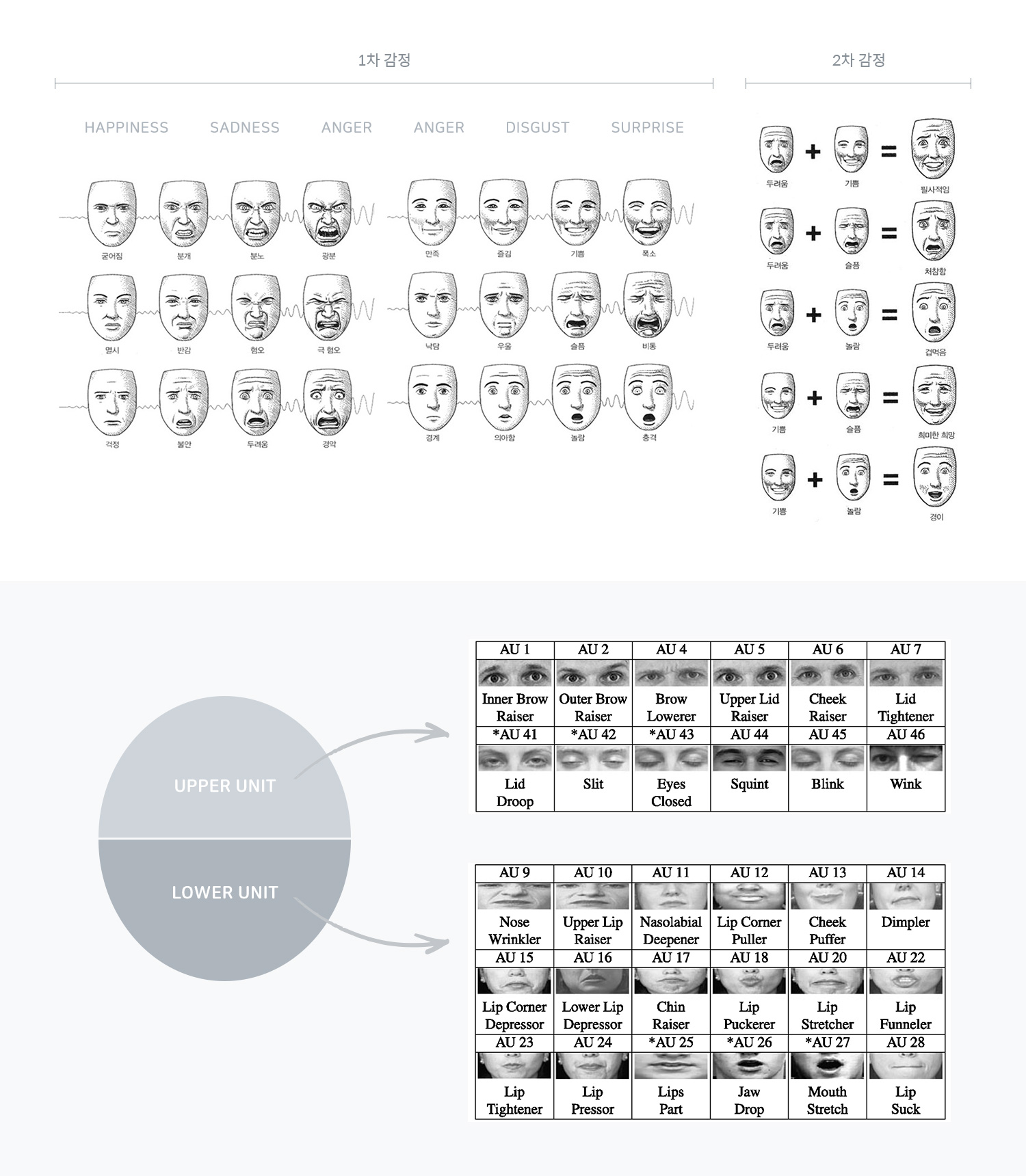
3. Expression: conveying emotion with part of a face
To convey emotion effectively on a small display, I explored using part of a face rather than the whole.
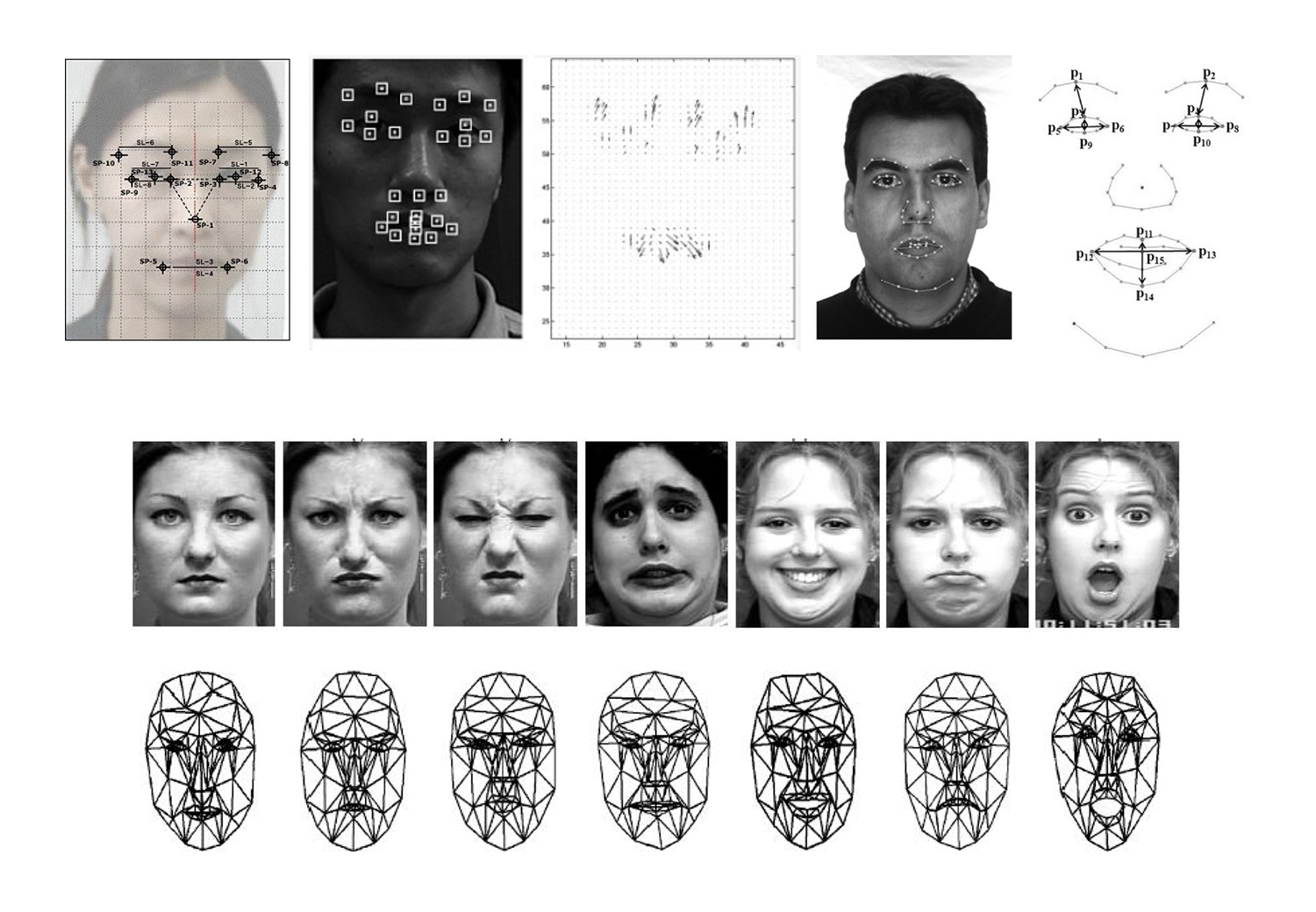
Drawing on Paul Ekman's Facial Action Coding System (FACS) and six basic emotions, I split the face into upper and lower areas and defined which part to show for each emotion.
For motion, I referred to how facial recognition research analyzes expressions as feature points and movement, aiming to capture how a real face moves.
A second direction: conveying emotion with simple shapes
Before the official project began, I proposed a separate visual concept to help review the display's specs. Using simple shapes like circles, lines, and squares with movement, I designed emotions and states that are easy to read on a small screen. I reduced complex expressions and detail, and focused on conveying meaning clearly through form and movement alone.





Outcome
Two visual concepts proposed
I presented the research and both visual concepts to SK Telecom. However, the project didn't lead to product development and ended at the concept stage.
SK Telecom later released a NUGU speaker with a display, using a separate design.
Reflection
This was the first project where I explored how to express an AI's emotions and reactions visually. Thinking through how much of a face to show, and which forms and movements could convey emotion, taught me how important motion can be even on a small display.
This experience also influenced how I later developed AUD's symbol into a typing character in ShareTalk.