
Accu Design Kit: Design Thinking Anyone Can Start
UX Labs ran design thinking workshops for people across SK, and I took part as a coach. Accu Design Kit is a digital toolkit that lets anyone use the methods from those workshops on their own. Based on user research, I designed it to recommend tools that fit each situation, explain difficult terms in plain words, and provide the features needed to run a workshop. It started as an internal tool for SK, and a strong response led us to open it to the public.
Problem
Design thinking that was hard to use after the workshop
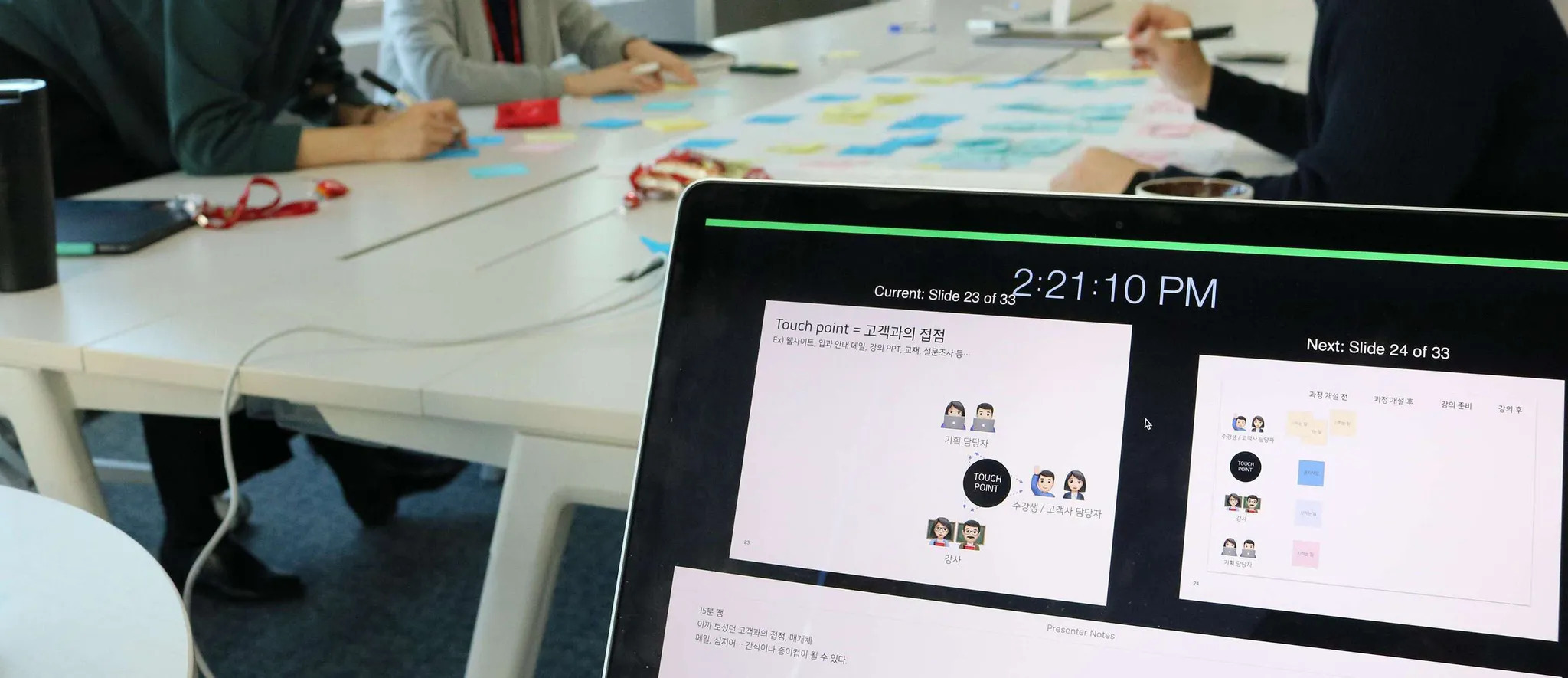
From 2019 to 2021, UX Labs ran regular design thinking courses at SK's training center. Participants practiced a range of methods on real business problems.
With a coach's help, the workshops ran without trouble, but applying them to real work afterwards was hard. People struggled to choose the right tool, needed help with unfamiliar terms, and found it difficult to run workshops with their teams.
Research
Finding what real users needed
First, in an internal UX Labs workshop, the coaches shared problems they had observed in training. I then interviewed course graduates and practitioners with workshop experience, including business development managers, business consulting planners, and facilitators.
“A simple, well-explained toolkit you can use right away would be ideal.”
“I struggled with activities like journey maps because I wasn’t familiar with them.”
“For things to run smoothly, everyone needs the same understanding of design thinking.”
I also analyzed the design thinking toolkits of Google, IBM, IDEO, and the LUMA Institute. Looking at how each one structured its information and content, I explored ways to make the kit easy for first-time users to understand and use.
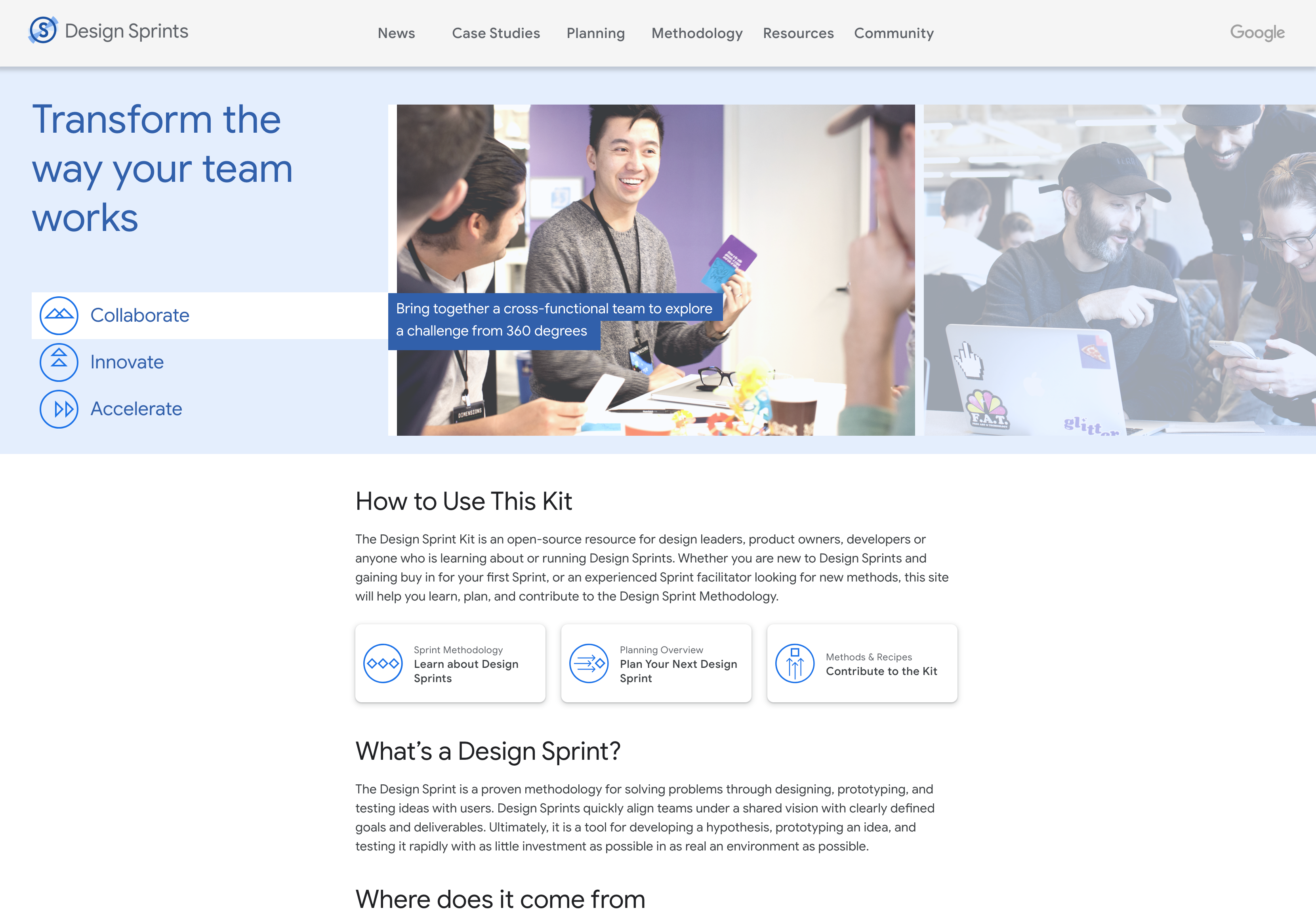
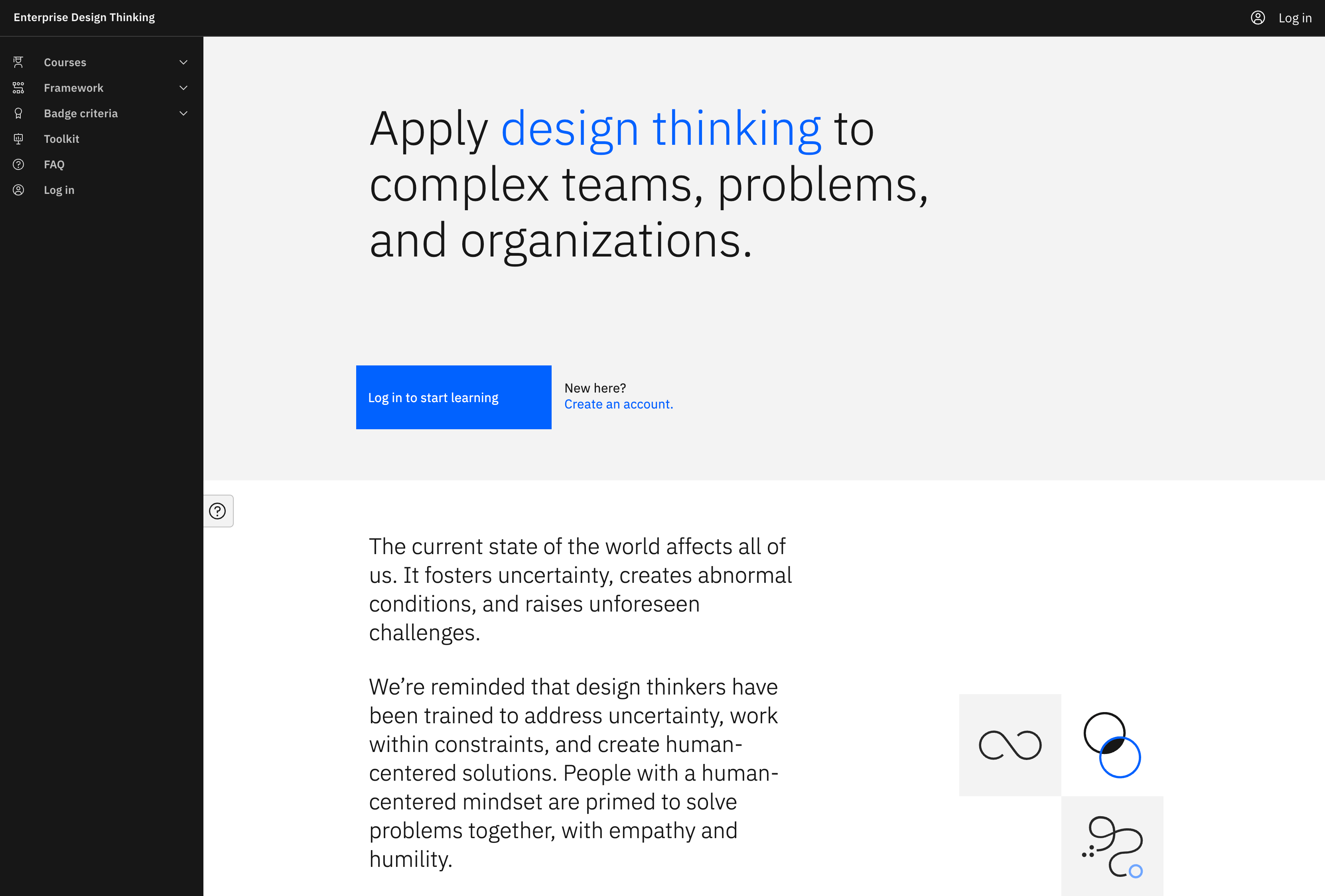
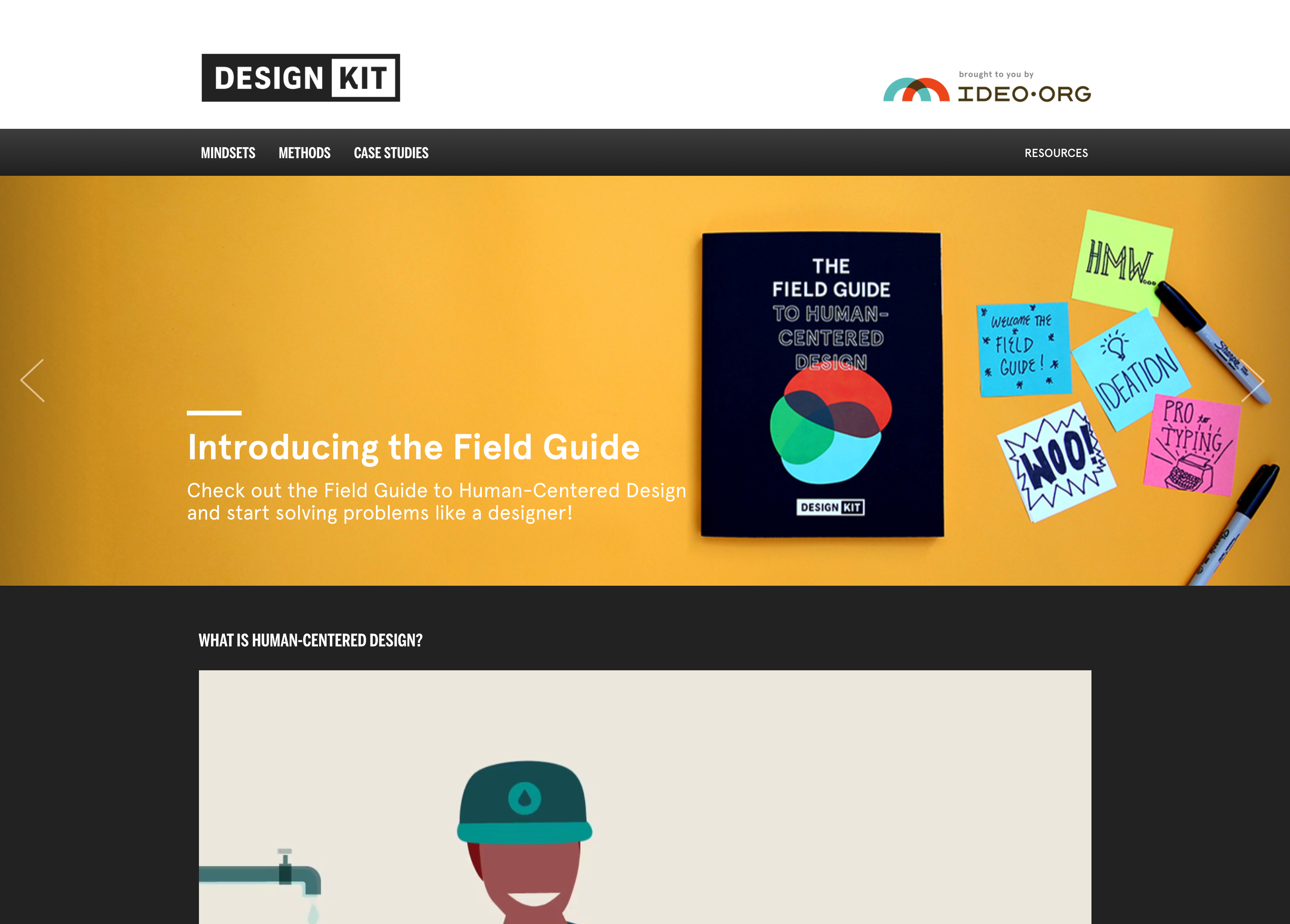
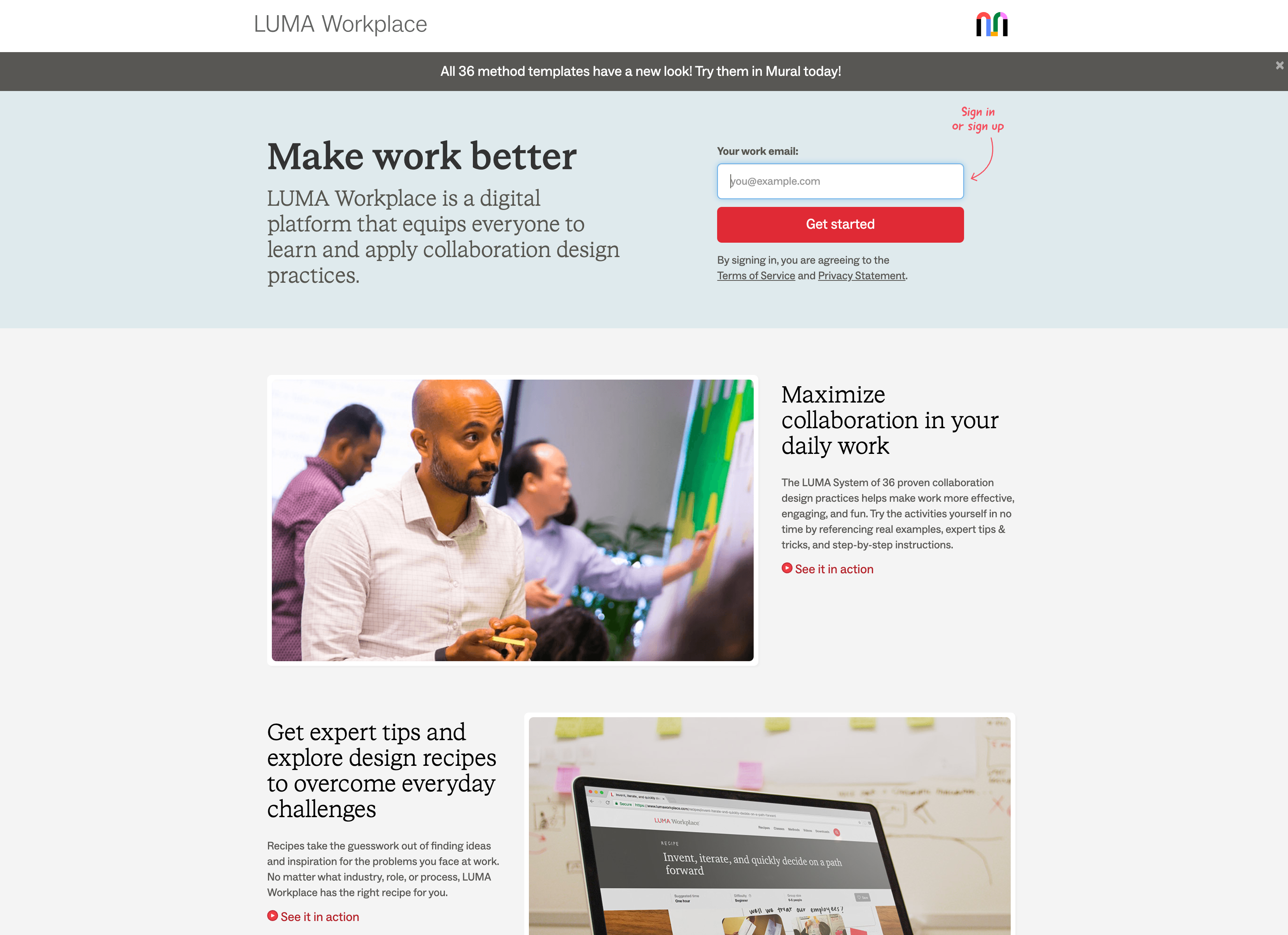
References: Google Design Sprints, IBM Enterprise Design Thinking, IDEO Design Kit, LUMA Workplace
The research set three design directions.
1. Start from the user's problem
People care more about the problem they need to solve now than about methods. They should be able to enter their situation and find the right tool.
2. Make complex methods easy to understand
Design thinking's stages and tools can feel unfamiliar at first. Plain terms and consistent visuals help people understand the whole process.
3. Lighten the load of running a workshop
Facilitators should be able to explain goals, share what to prepare, and manage time without preparing separate materials.
Design
Turning abstract methods into tools you can use
I designed the toolkit's information architecture and UI. To keep the focus on content, the screens are built on neutral colors, with color used only to mark the four stages of design thinking.
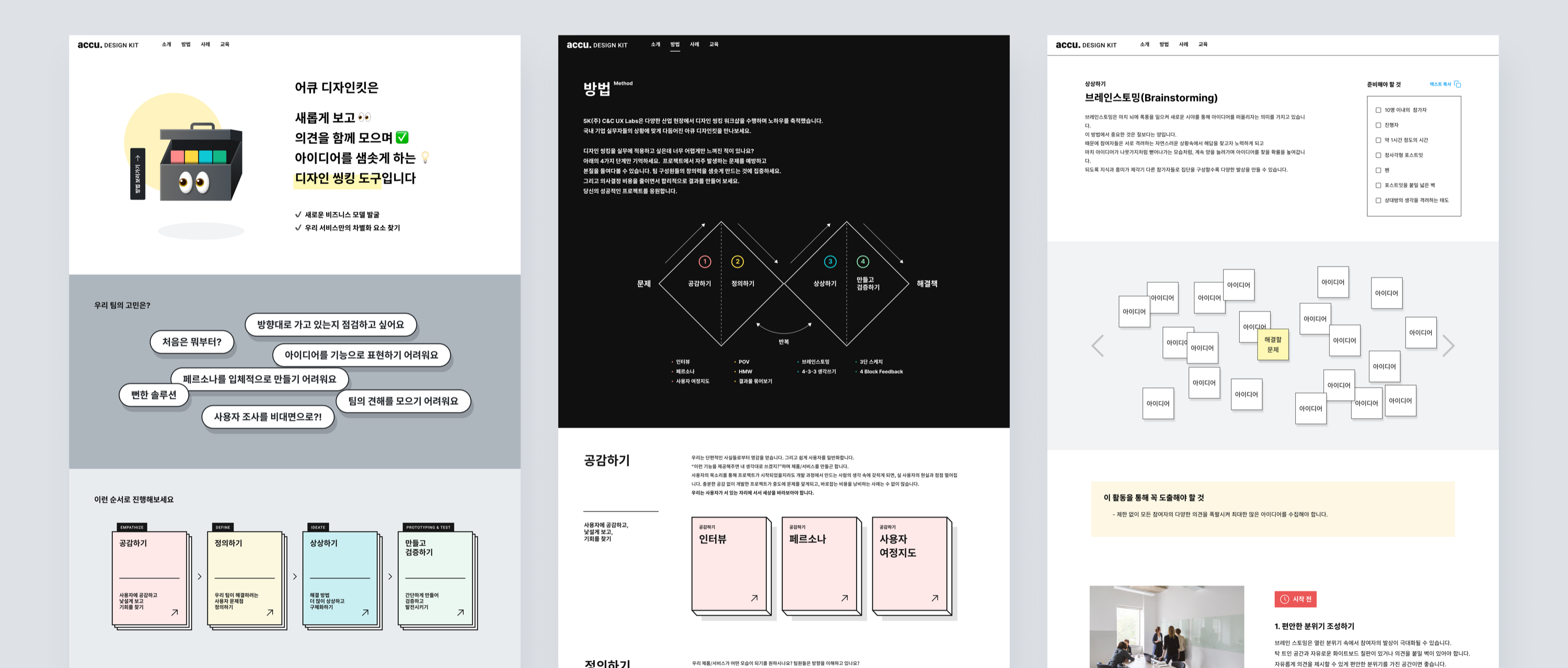
The design concept started from a toolbox. Inspired by an IDEO workshop, I created a symbol made of four colored pieces. Each piece stands for a stage of design thinking, making an abstract method feel familiar.
1. A few questions that recommend the right tool
I designed a question-based flow so people don't have to search through countless methods themselves.
Choose who you're working with, your project type, and the problem you want to solve, and the kit recommends tools for your situation. Common difficulties, like not knowing where to start, also lead straight to a relevant tool.


2. Turning jargon into words people understand
Design thinking came with many English terms that felt unfamiliar to first-time users. I renamed the four stages in easy Korean, and added a short explanation to widely used methods like POV and HMW.
Empathize
공감하기
“empathizing”
Define
정의하기
“defining”
Ideate
상상하기
“imagining”
Prototype & Test
만들고 검증하기
“make it, then check it”

3. Everything for running a workshop in one place
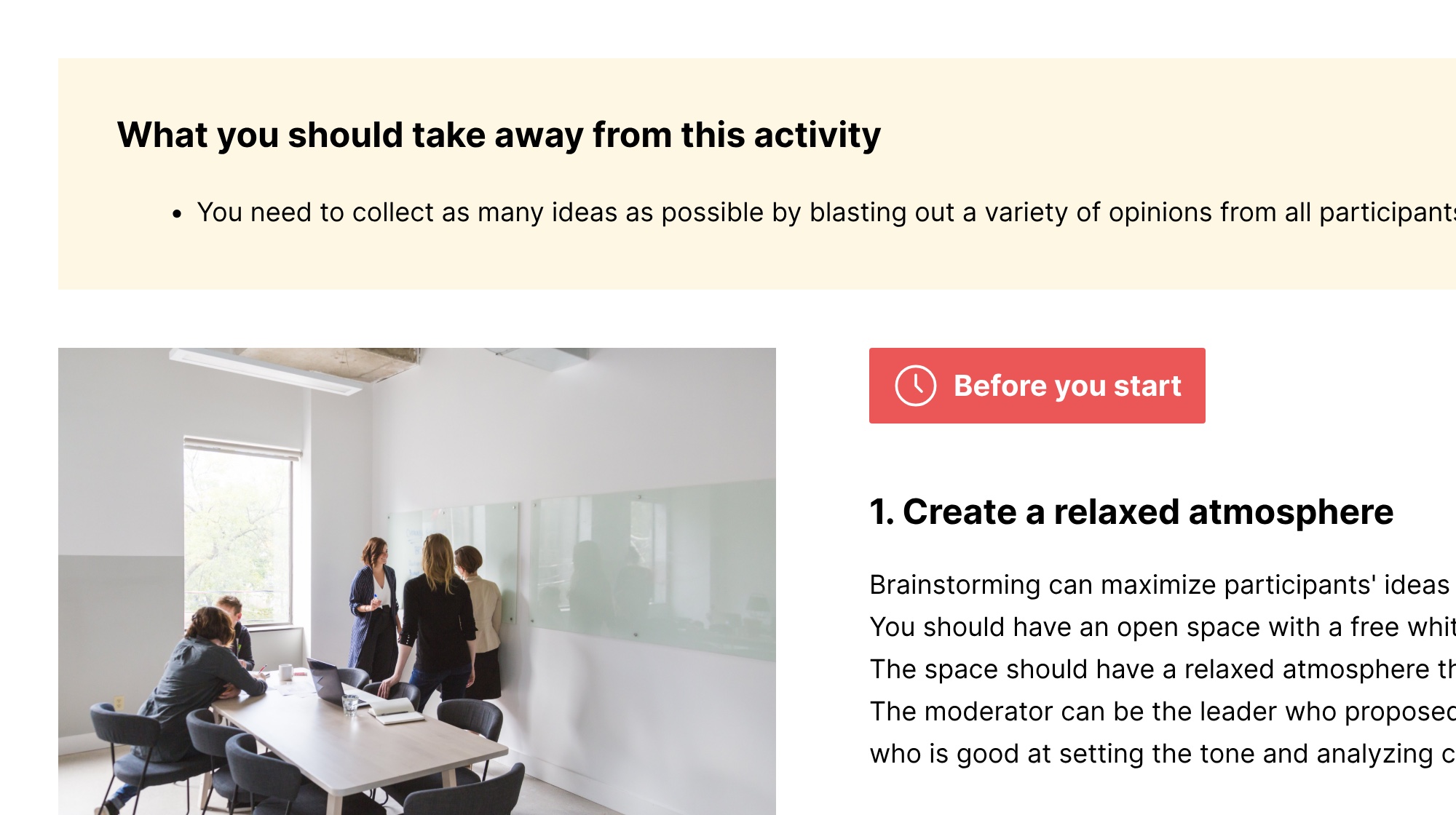
Each activity opens with its purpose, so participants easily understand the goal. Prep checklists can be shared with teammates right away, and each activity comes with a timer and templates.
Facilitators can run a workshop from one screen, without moving between materials and tools.

Outcome
From an internal toolkit to a public release
Accu Design Kit launched for SK employees. After a strong internal response, we opened it to the public, and it was featured in Design Spectrum, a Korean design community.
The service has since ended, as the UX Labs team was disbanded.
Reflection
Working as a workshop coach taught me that a designer's role isn't only about making screens. Helping people with different backgrounds and perspectives share their views, understand a common problem, and move in the same direction is an important part of design too.
I especially experienced how better ideas come from looking at a problem through different stakeholders' eyes. The facilitation I learned here became an important foundation for seeing problems from the user's perspective and bringing a team's views together to find solutions.